
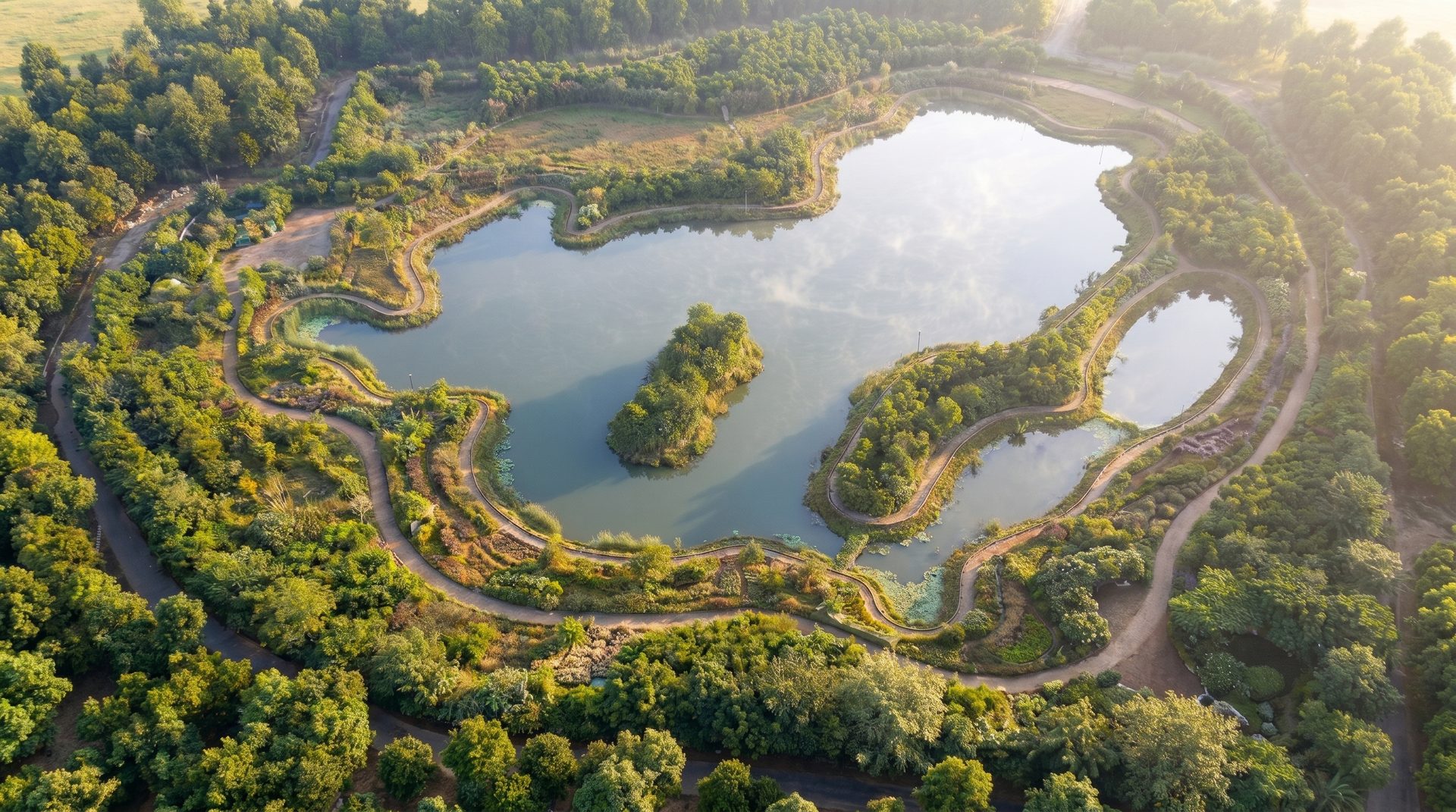
Anandam Jedva Lake Project
Lake restoration and ecological regeneration designed as a standalone environmental project.
Anandam Jedva Lake is presented here as a distinct project with its own environmental purpose, restoration methodology, and measurable outcomes. Anandam Parivar is the parent initiative behind the work, but this page focuses specifically on the lake project itself.
A project by Anandam Parivar
Ecological Restoration
Water Systems
Biodiversity Regeneration
Climate Resilience
Public Green Asset
Milestone Event
Historic Rejuvenation & Inauguration
Inaugurated on
28 May 2026
In the presence of
Shri Amitbhai Shah
Union Minister of Home Affairs and Co-operation, Government of India, and Member of Parliament representing the Gandhinagar constituency in the Lok Sabha.
Shri Bhupendrabhai Patel
Chief Minister of Gujarat
Marking a landmark achievement in ecological restoration and public green infrastructure, the Vadsar Jedva Lake rejuvenation project represents the perfect synthesis of modern hydrology, biodiversity preservation, and 100% carbon-neutral solar green energy.
Project Glimpse
From restored water edges to a larger civic green destination.
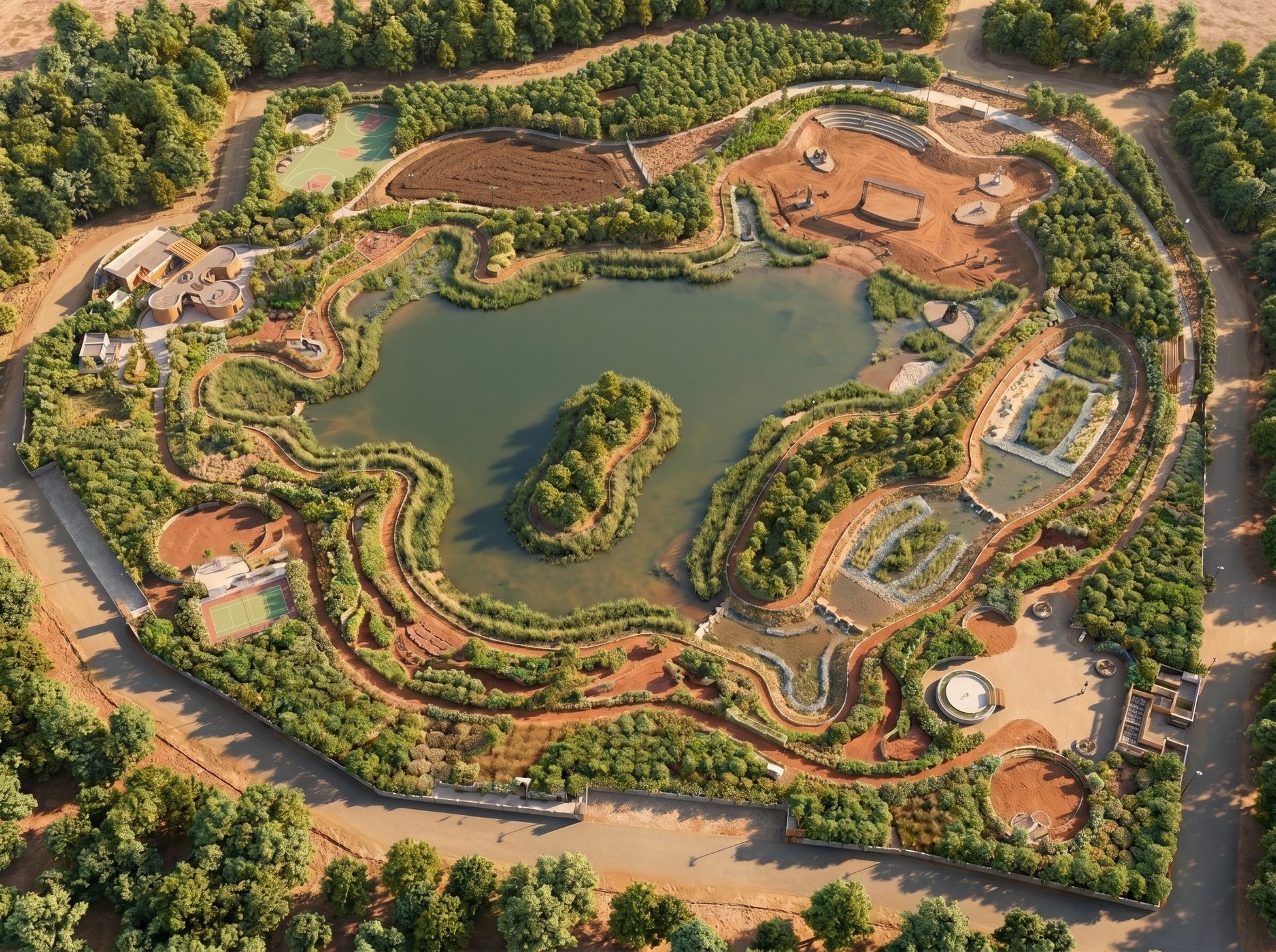
This section gives a quicker visual read of the project: the lake itself, the restoration structure around it, and the broader public-facing green vision that the project can grow into.
 by SG-11.jpg)
 by SG-5.jpg)
 by SG-8.jpg)
Project Vision
A scientifically engineered ecological restoration model for Gujarat’s semi-arid urban landscape.
Project Identity
Anandam Jedva Lake stands as a focused restoration project within a wider environmental vision, with its own role in water recovery, habitat creation, and landscape renewal.
Designed for Local Conditions
The model is built for Gujarat’s semi-arid climate, groundwater stress, and the sustainability demands of growing urban edges.
Wide Public Benefit
The intended outcomes span ecological, environmental, social, and educational value, with lake rejuvenation and biodiversity restoration at the center.
A Revival Story
What was once a declining lake edge has been reworked as ecological infrastructure and public landscape.
Anandam Jedva Lake once functioned as a natural catchment on Ahmedabad’s edge, receiving runoff from nearby villages and farmlands, recharging groundwater, and supporting local ecological cycles.
Over time, blocked inlets, altered terrain, land filling, and invasive growth reduced its water-holding capacity. The renewed lakefront now reconnects watershed behavior, stabilizes the edges, supports aquatic habitats, and creates a public realm of promenades, shaded plazas, play areas, and green pockets.
Scale At A Glance
Large-scale ecological work translated into simple numbers.
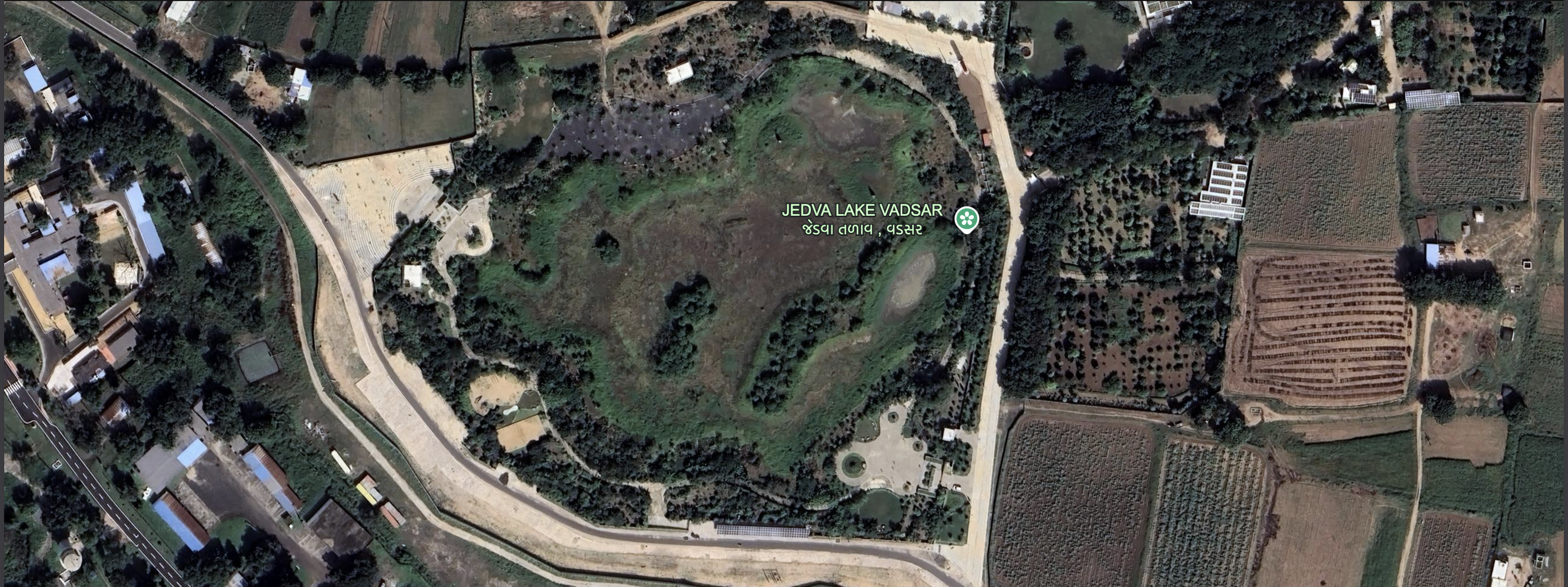
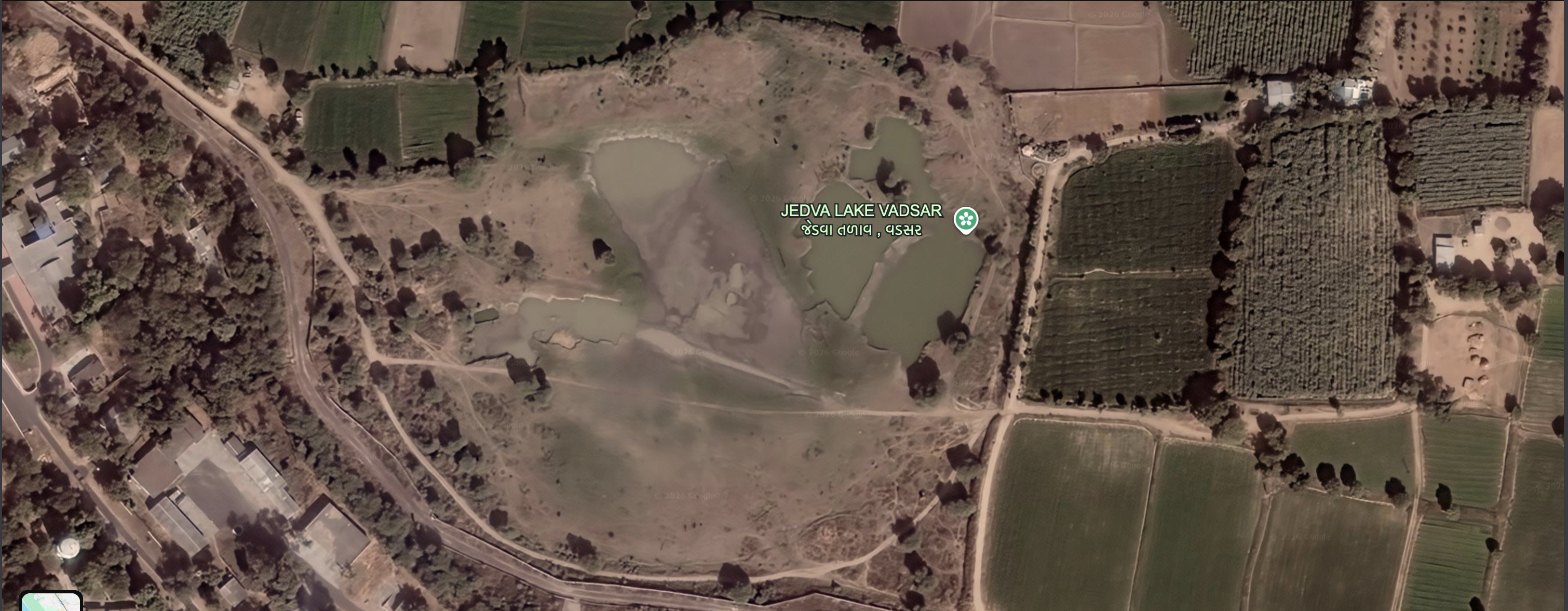
Landscape Transformation
From reduced catchment and invasive pressure to a renewed ecological system.
The site shows three visible shifts over time: natural catchment function in 2010, reduced capacity following land filling by 2013, and extensive invasive spread by 2021. The current restoration effort aims to reverse that decline through hydrology repair and ecological plantation design.
Challenges Identified
The problem was environmental, hydrological, and climatic at the same time.
Disturbed Hydrology
Land filling interfered with natural water movement and catchment behavior.
Reduced Water Holding
Invasive species and accumulated pressure weakened the lake’s holding capacity.
Heat Stress
Urbanization intensified local heat and weakened environmental balance.
Ecological Imbalance
Lower groundwater levels, higher temperature, and disrupted habitat conditions made restoration urgent.
Scientific Methodology
Restoration grounded in soil engineering, canopy logic, and water management.
The restoration strategy uses rice and wheat husk, groundnut shells, coco peat, sugarcane biomass, and organic manure to improve soil structure and water behavior.
It also outlines three-layered zig-zag canopy plantation, terrain grading, filtration chambers, percolation systems, and vetiver grass as part of a hydrology-aware ecological design.
Biodiversity Regeneration
Habitat restoration is treated as a core outcome, not a side effect.
Dense native tree zones support nesting, pollination, mating cycles, and protection from aggressive disturbance.
It also records reappearance and habitat support for birds, reptiles, bees, butterflies, squirrels, ducks, earthworms, and connected land-to-aquatic biodiversity.
Habitat Recovery
- 50+ bird habitats established
- Native tree nesting and pollination islands restored
- Food-chain interactions strengthened
- Habitat complexity improved across vegetation and water edges
Ecological Palette
A Rich Species Diversity: Restoring Native Canopy & Habitats
The architect’s case study documents a rich planting palette across canopy, flowering, shade, and habitat-support species, with bird activity forming a visible sign of ecological return.
Restored Tree Canopy
Albizzia amara
Alstonia scholaris
Terminalia arjuna
Ficus benghalensis
Azadirachta indica
Cassia fistula
Pongamia pinnata
Neolamarckia cadamba
Tamarindus indica
Ficus religiosa
Avian Diversity & Bird Life
Rufous Treepie
Ashy Prinia
Purple Sunbird
Red-vented Bulbul
Common Tailorbird
Jungle Babbler
Red-naped Ibis
Indian Robin
Oriental Magpie Robin
Black Drongo
Grey Francolin
Green Bee-eater
Climate Resilience & Impact
Measured outcomes that connect ecology with public benefit.
Long-Term Carbon Sink
The project is positioned as an environmental cooling system and a long-term carbon asset.
Hydrological Restoration
Recharge, infiltration, and runoff control are presented as key stabilizers for the local water cycle.
Urban Ecological Stabilization
The site can function as a replicable biodiversity corridor and climate adaptation model.
Zero Carbon Operations
100% relying on clean, on-site solar green energy.
Vadsar Jedva Lake functions as a completely carbon-neutral ecological model. Every active system on the site is powered entirely by clean energy generated by dedicated, high-efficiency solar panel installations.
By integrating green power directly into our restoration efforts, the lake operates as a self-sustaining sanctuary that nurtures nature without placing any resource demands on municipal power grids.
100% Solar Powered
Zero Carbon Footprint
Smart Aeration Systems
High-efficiency mechanical aerators run dynamically during peak sunlight hours, drawing power directly from clean solar generation to maintain oxygen levels in the water.
Net-Zero Grid Contribution
The project is grid-tied: all extra clean energy generated during peak hours is actively exported back to the municipal grid, supporting wider community green power initiatives.
Carbon-Neutral Operations
Essential systems, smart sensors, and low-wattage LED night lighting draw grid power only as needed, fully offset by the daytime solar energy exported to the grid.
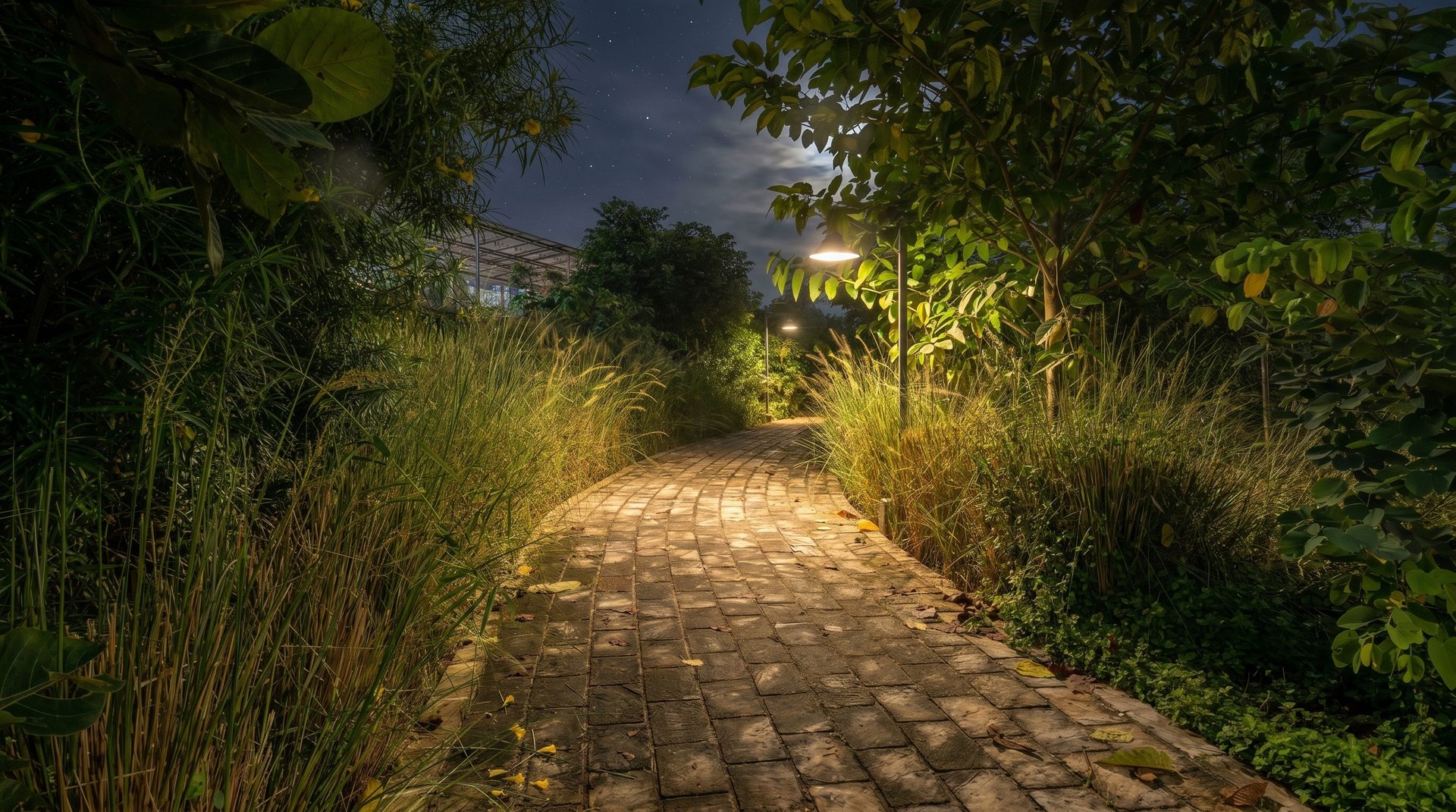
Day & Night Experience
A project that can feel alive in daylight and equally memorable after dark.
_by_SG-18_202605270226.jpeg)
Future Scalability
A model designed to extend beyond one site.
The model is designed to scale across lakefronts, institutional campuses, public lands, and urban corridors. It combines hydrology, biodiversity, soil engineering, environmental science, and climate adaptation into one framework.
It also points to social and economic benefits such as healthier public spaces, lower dust exposure, thermal comfort, reduced flood stress, and stronger sustainability-linked environmental value.
Green Gujarat
From isolated land patches to an interconnected ecological system: this is the broader direction described in the project vision, with Anandam Jedva Lake acting as one strong demonstration project.
Discuss The Project