
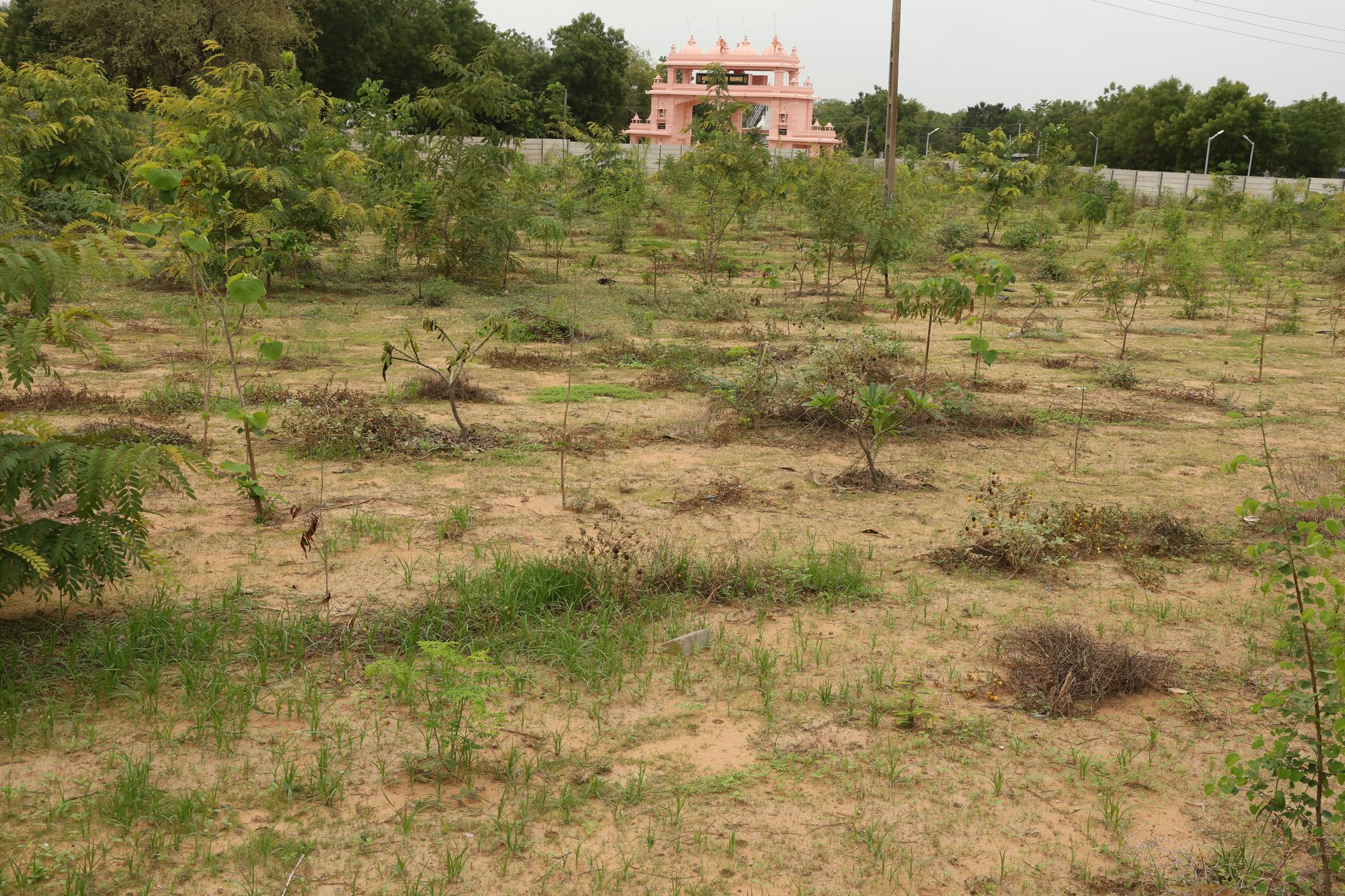
Anandam Dantali Oxygen Park
Reclaiming waste-affected land into a dense native green space.
Restoring degraded land into a dense, native green landscape — reclaimed from waste and rebuilt through soil restoration and high-density plantation.
A project by Anandam Parivar
Land Reclamation
Dense Plantation
Soil Restoration
Native Species
Heat Island Reduction
Project Overview
Proof that degraded land can become productive green infrastructure.
The Site
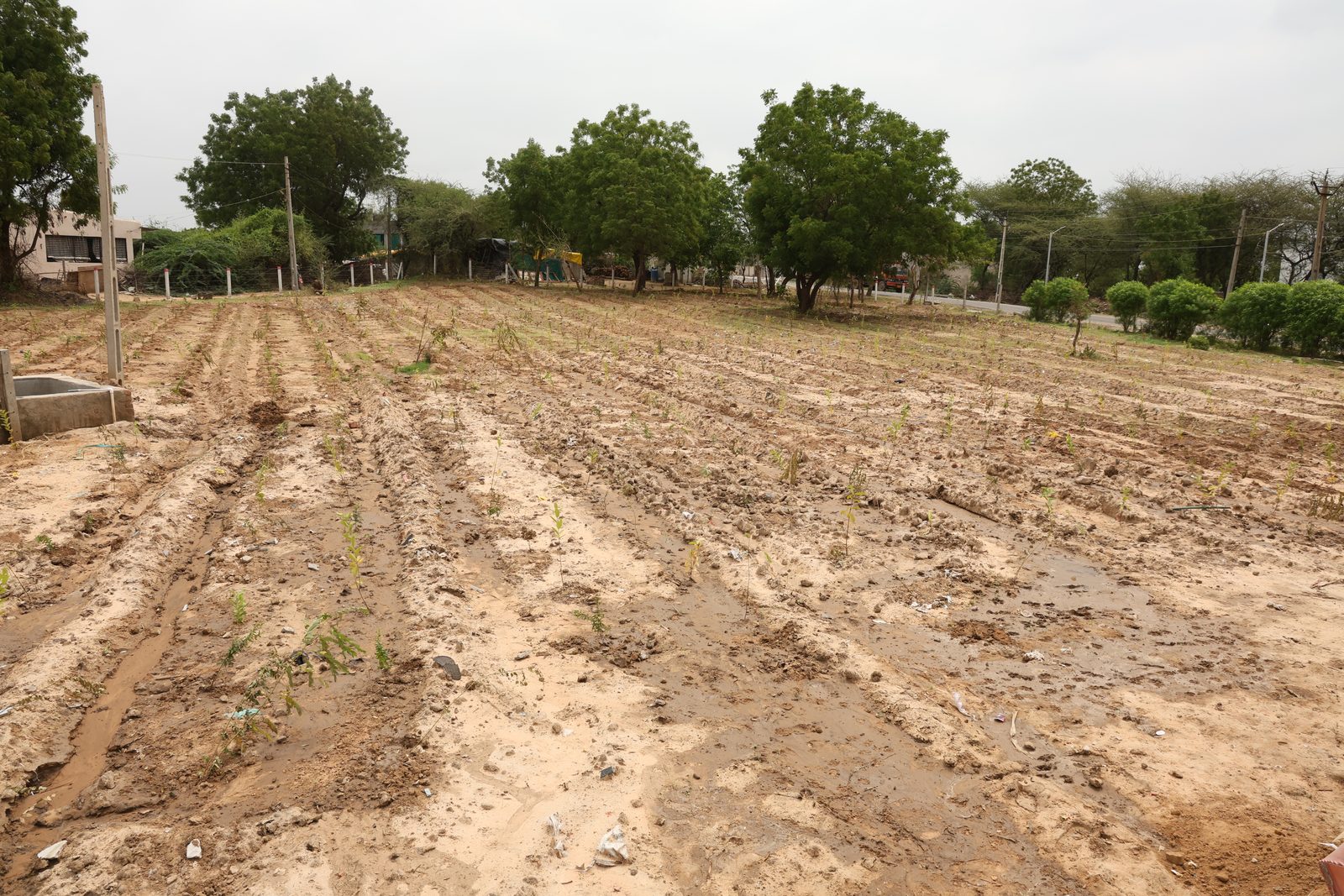
Roughly 9,000 m² of open land that had collected plastic waste, village refuse, and construction debris across uneven, pitted ground — unsuitable for plantation without significant restoration.
The Approach
No lake here. Instead, the project maximizes green cover through high-density plantation, with careful earthwork and grading to turn a difficult site into a stable foundation for trees.
The Soil
A rocky upper layer required real land preparation, while the black soil below retains moisture well — an asset for plant growth once the ground was made plantable.
Scale At A Glance
A compact, high-density restoration site.
Site Reclamation
Before anything could grow, the land had to be reclaimed.
The Dantali site carried the marks of years of neglect — accumulated plastic waste, village refuse, and construction debris scattered across large depressions in the ground. None of it was plantable in that state.
All waste and debris were cleared, and earth was brought in from outside to fill the depressions and bring the site up to a workable level. Motor graders then levelled the ground, and a boundary was set to protect the restored land — turning a waste-affected plot into a stable base for dense plantation.
Soil Profile
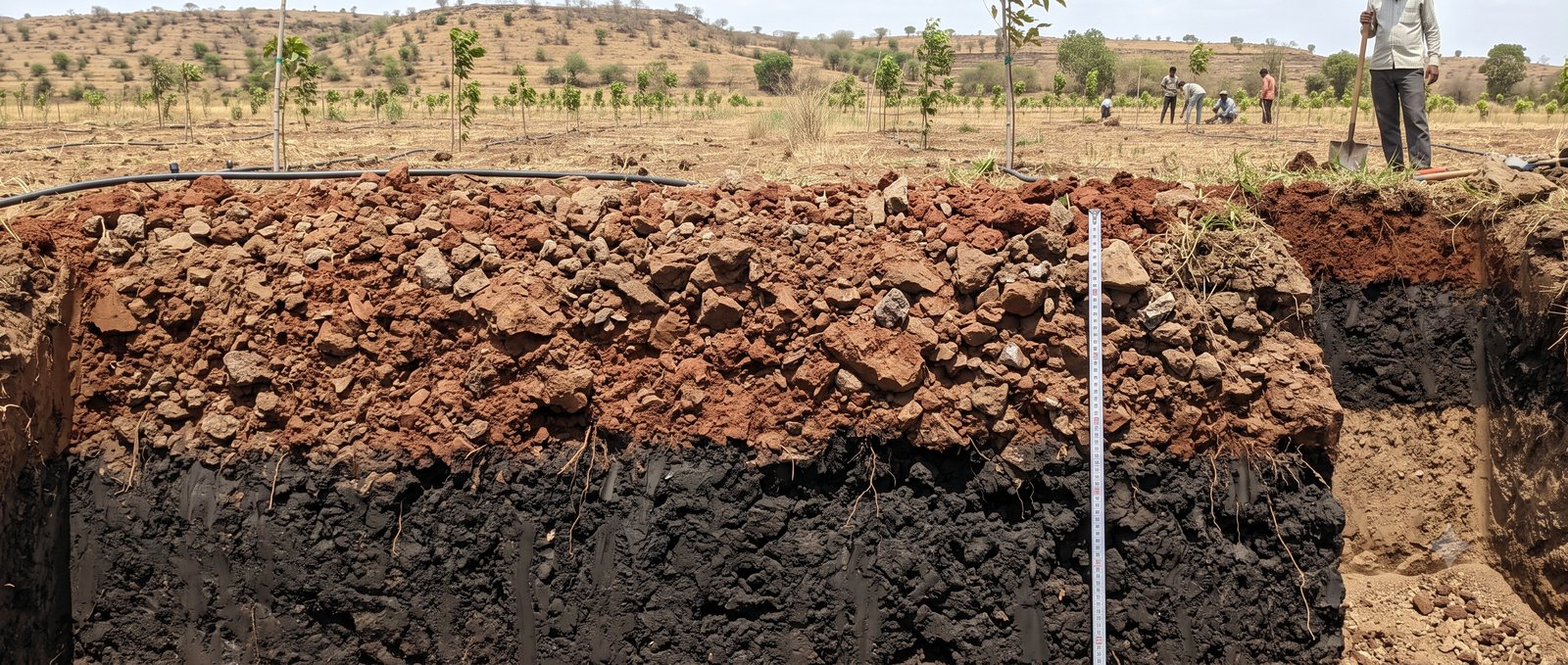
Hard on top, giving underneath — a profile that shaped the work.
Each Anandam oxygen park sits on a different soil profile, and the plantation strategy is adapted to it rather than applied as a one-size-fits-all template. Dantali’s rocky upper layer was the site’s biggest preparation challenge — demanding real earthwork before any pit could be dug.
Below the rock, however, lies black soil with strong moisture-retention properties. Once the ground was made plantable, that lower layer became an asset — holding water for plant roots through the dry months and supporting healthy establishment.
Upper Layer · Rocky
Required significant land preparation and earthwork before plantation could begin.
Lower Layer · Black Soil
High moisture retention, providing a reservoir of water for healthy plant growth.
Scientific Plantation
The same disciplined method used across every Anandam park.
01 · Plantation Grid
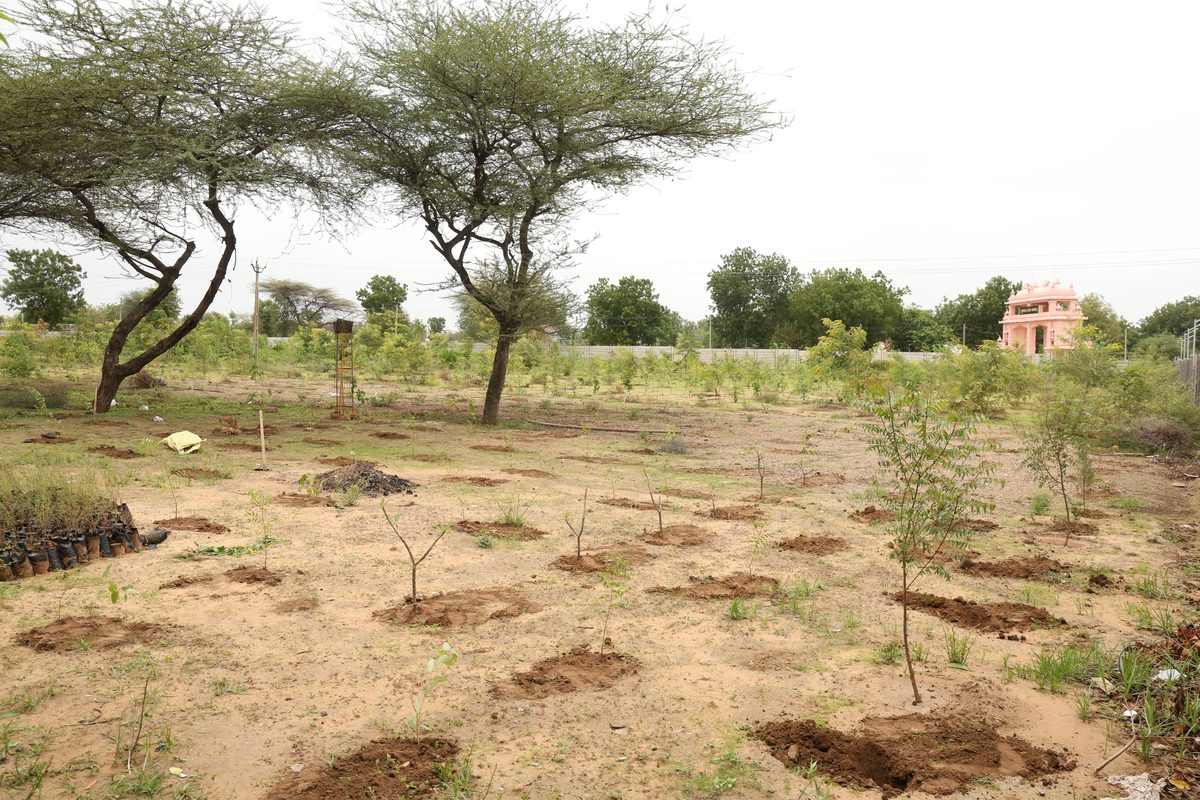
Uniform 1 m × 1 m spacing for high-density, forest-like plantation across the site.
02 · Pit Size
Standardized 1 ft × 1 ft × 1 ft pit at every grid point for consistent establishment.
03 · Irrigation Trenches
Shallow trenches alongside plantation rows carry water efficiently and reduce manual watering.
04 · Native Species Mix
Climate-resilient native trees and shrubs suited to Gujarat with minimal long-term maintenance.
05 · Moisture Retention
The black lower soil holds moisture, giving young roots a reservoir through dry spells.
06 · Establishment Care
Staking, irrigation after planting, and monitored watering through the establishment period.
Environmental Benefits
A small site with an outsized local effect.
High-density plantation on a compact urban plot delivers real local benefits: cooler ground, cleaner air, and a green buffer where there was bare, waste-strewn land. As the canopy closes in, the site works as a heat-island break for its surroundings.
The ranges below are drawn from established urban forestry research and describe the expected condition of the mature landscape.
Expected At Maturity
- Improved local green cover and air quality
- Reduced ambient and ground surface temperatures
- Dust suppression along the site edges
- Habitat for birds, pollinators, and beneficial insects
- Improved soil stability and biological activity
Site Photo Documentation
On-ground progress, published as the project advances.
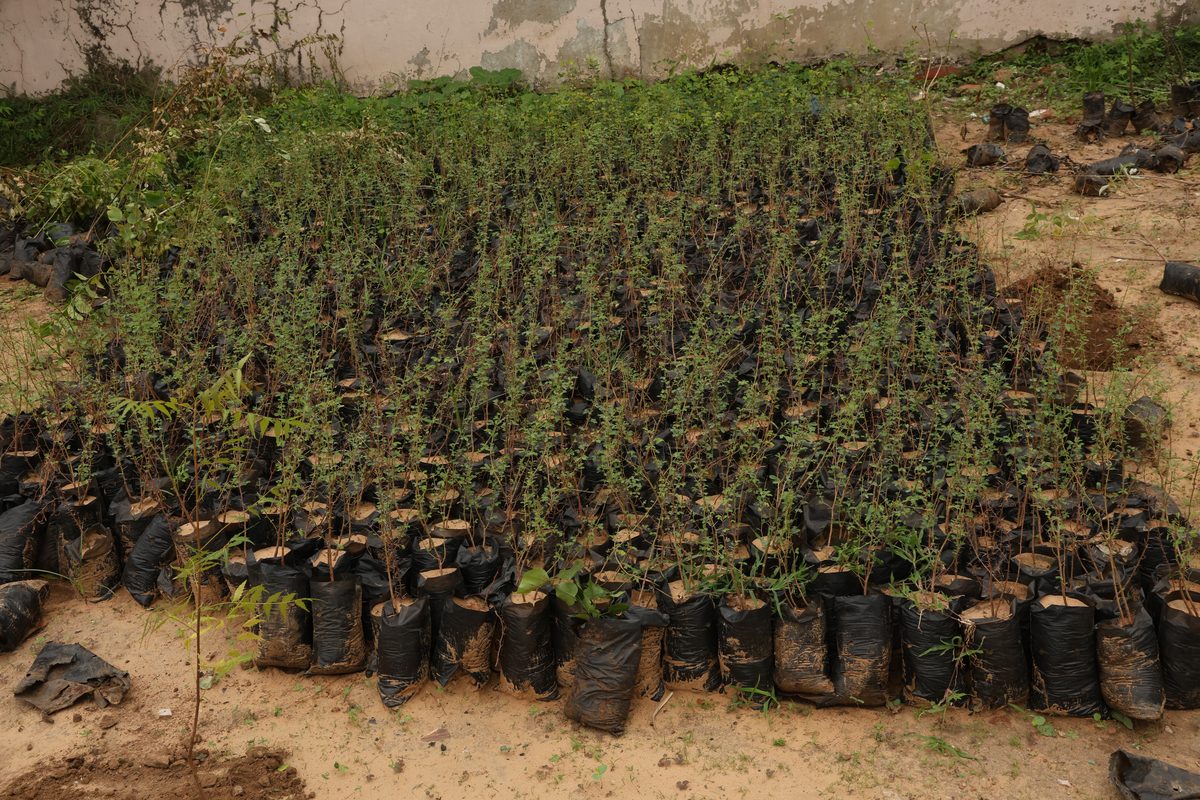
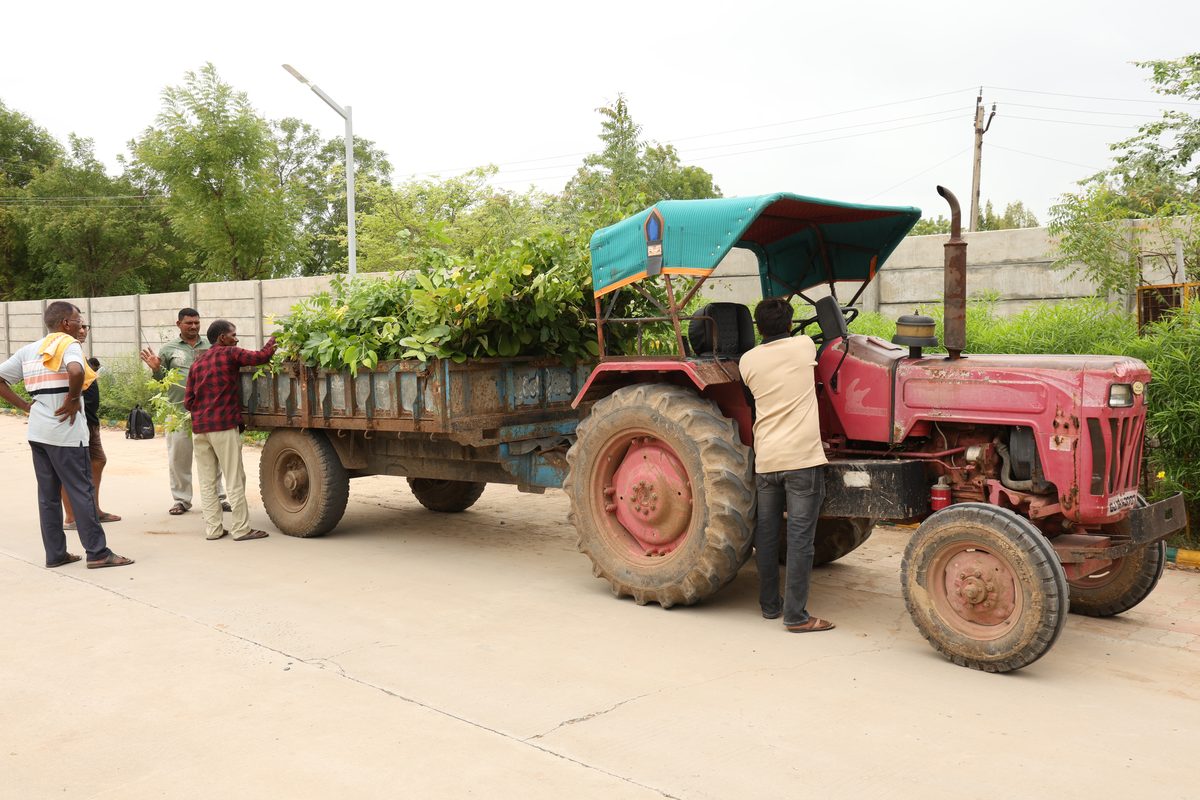
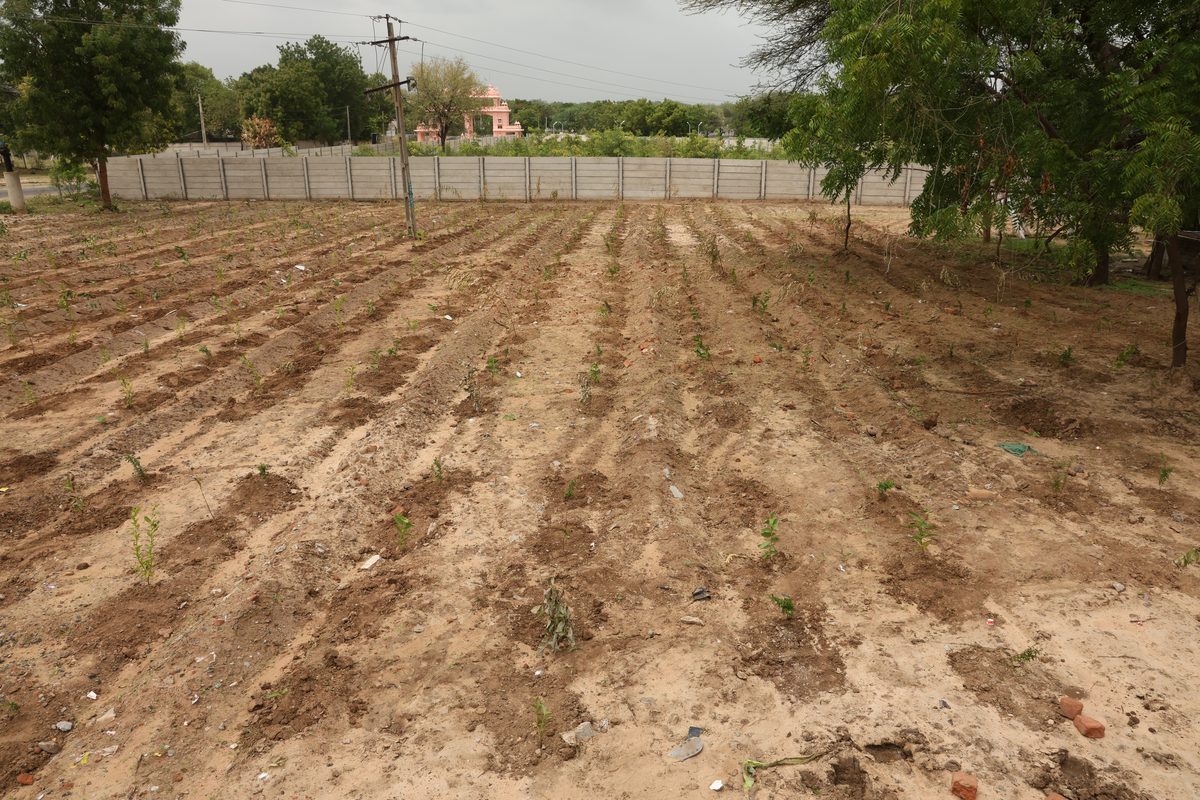
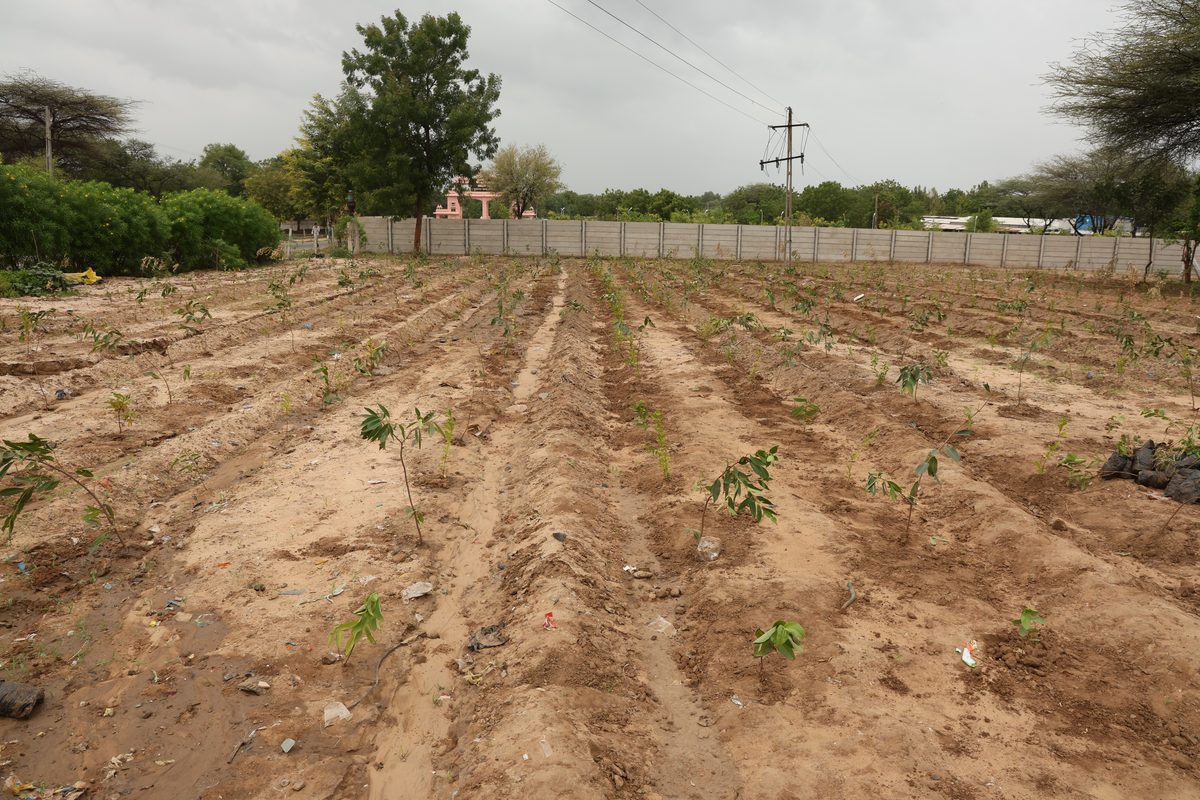
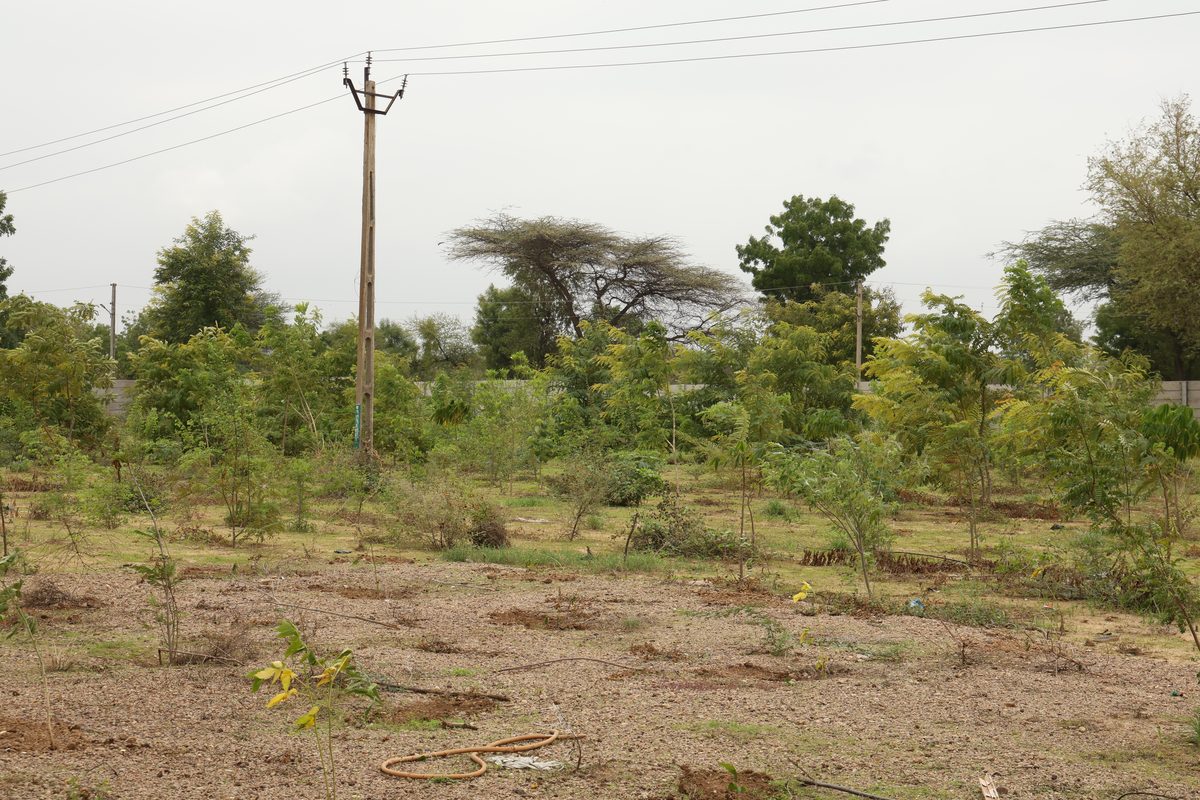
After reclamation, the Dantali site has been graded, planted, and fenced. These photos show the land as it stands today — native saplings established across prepared rows, with the canopy still to come.
Challenges & Solutions
Turning the hardest kind of site into green infrastructure.
Challenges
- Large depressions across the site
- Accumulated plastic waste
- Construction debris
- Village solid waste
- Rocky upper soil and uneven, unplantable ground
Solutions
- Removal of all waste materials from the site
- Imported earth filling to restore levels
- Scientific grading with motor graders
- 1 m × 1 m plantation grid development
- Native species plantation with trench irrigation
Key Successes
- Reclaimed degraded land previously unsuitable for ecological use
- Converted a waste-affected plot into a planned green landscape
- Established a foundation for long-term biodiversity enhancement
- Demonstrated a repeatable model for restoring difficult urban sites
Environmental Infrastructure
More than trees — an investment in natural infrastructure.
The indicators below are the combined totals across all three Anandam oxygen parks — Jaspur, Dantali, and Lapkaman. Together they function less like a plantation and more like a piece of public infrastructure: land restored, water banked, air cooled.
Dantali’s share
9,000 m²
of the restored landscape
15,000
of the trees & shrubs
No lake
a dense, plantation-focused site
Land & Plantation
Water
Climate & Air
Operational Efficiency
Survival Scenarios
Carbon and oxygen, modelled three ways.
Rather than assume a single outcome, the projections are modelled at three long-term plantation survival rates across all 215,000 trees. We publish 70% as our baseline.
60%Survival
- Mature trees
- 129,000
- CO2 / year
- ≈2,300 t
- Oxygen / year
- ≈12,900 t
70%Survival
- Mature trees
- 150,500
- CO2 / year
- ≈2,700 t
- Oxygen / year
- ≈15,050 t
80%Survival
- Mature trees
- 172,000
- CO2 / year
- ≈3,100 t
- Oxygen / year
- ≈17,200 t
A note on methodology
The environmental impact figures presented are engineering estimates based on project dimensions, lake geometry, Gandhinagar’s average annual rainfall, regional soil characteristics, published urban forestry and hydrological research, and projected long-term plantation survival. Actual outcomes will depend on rainfall variability, species survival, maintenance practices, and natural site conditions.
Growing A Greener Tomorrow
From dumping ground to a thriving native habitat.
With the waste cleared, the ground rebuilt, and 15,000 native trees and shrubs planted on a disciplined grid, Dantali is set to mature into a dense green habitat — supporting birds and pollinators, improving air and soil, and giving nearby communities a healthier environment.
Site photography and detailed plantation documentation for Dantali will be published here as the project progresses.
Be Part Of The Green Movement
Want to support, visit, or collaborate on Anandam’s oxygen parks? We would love to connect and share the road ahead for Dantali and our other green projects.
Discuss The Project