
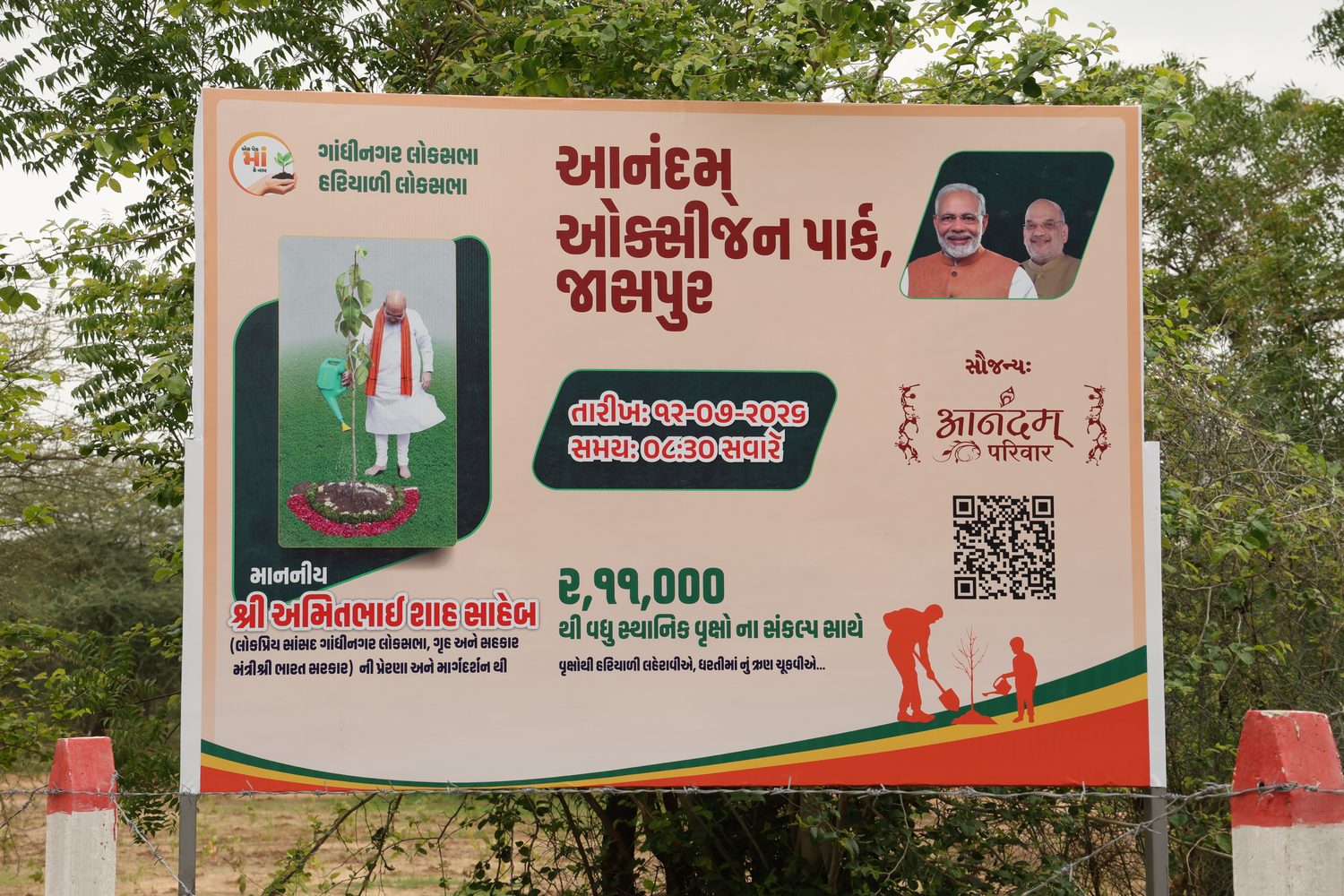
Anandam Jaspur Oxygen Park
A mega plantation transforming dryland into a living green lung at Jaspur, Gujarat.
Transforming under-utilised land into a resilient ecological landscape through scientific plantation, rainwater harvesting and sustainable irrigation.
A project by Anandam Parivar
Mega Plantation
Land Preparation
Native Species
Water Retention
Dryland Restoration
Project Overview
A structured, plan-driven plantation designed for Gujarat’s semi-arid dryland.
Location
Jaspur, Gujarat
Activity
Mega Plantation – Land Preparation
Plantation Target
40,000 trees & shrubs
Plantation Grid
1 m × 1 m spacing
Pit Size
1 ft × 1 ft × 1 ft
Canopy Palette
68 native tree species
In Partnership With
Government of Gujarat
Scale At A Glance
Large-scale groundwork translated into simple numbers.
Site Assessment & Preparation
From dense Desi Babool scrub to a planned ecological landscape.
The site was initially dominated by dense Desi Babool (Acacia nilotica), which left little room for a diverse plantation. A careful assessment identified what to retain and where selective vegetation management was needed to open the ground for scientific planting.
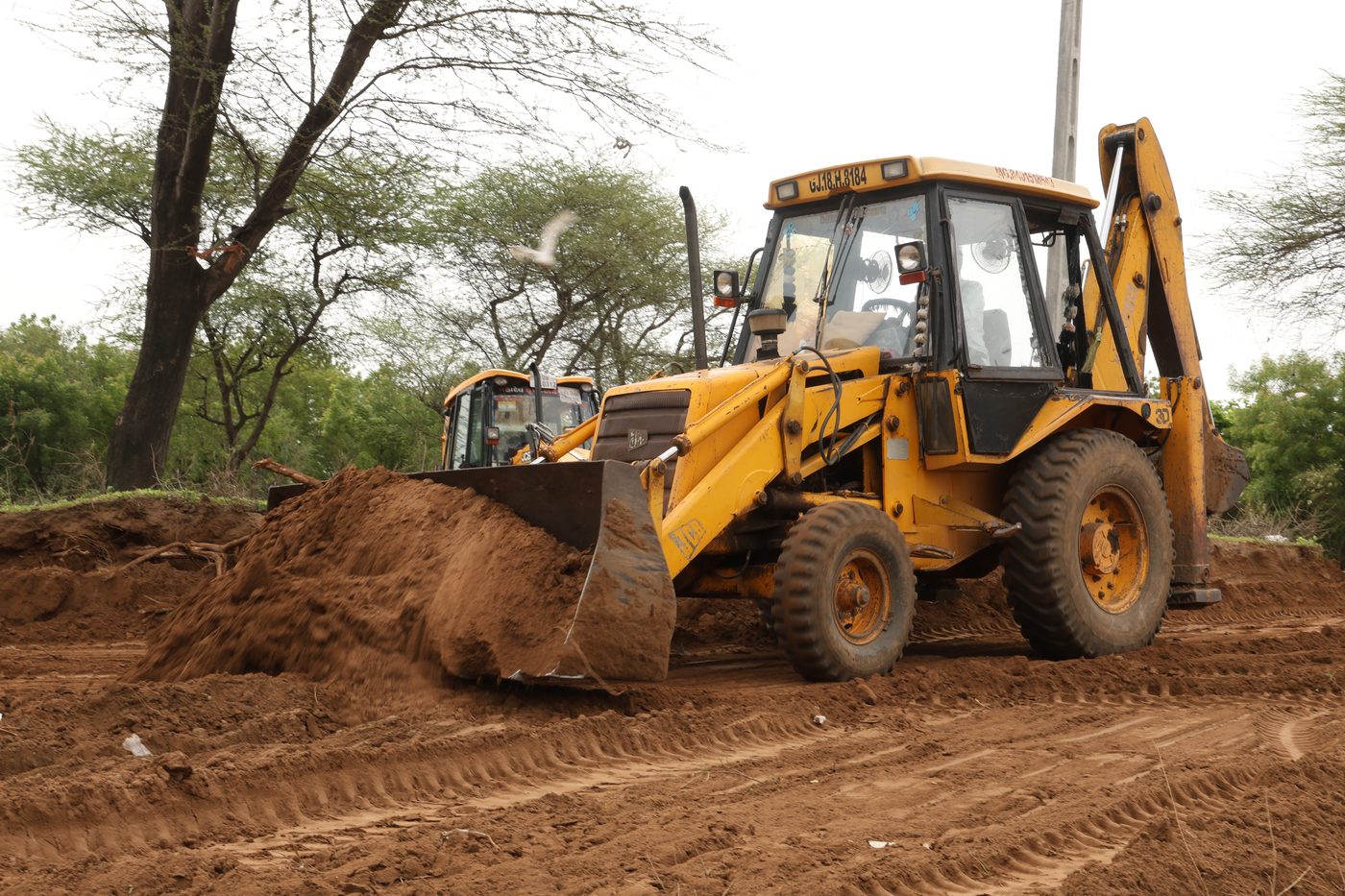
Land was then levelled with motor graders, a boundary fence was built to protect the site from encroachment, and part of the lake was excavated — shaping a stable foundation for the plantation, trenches, and water systems that follow.
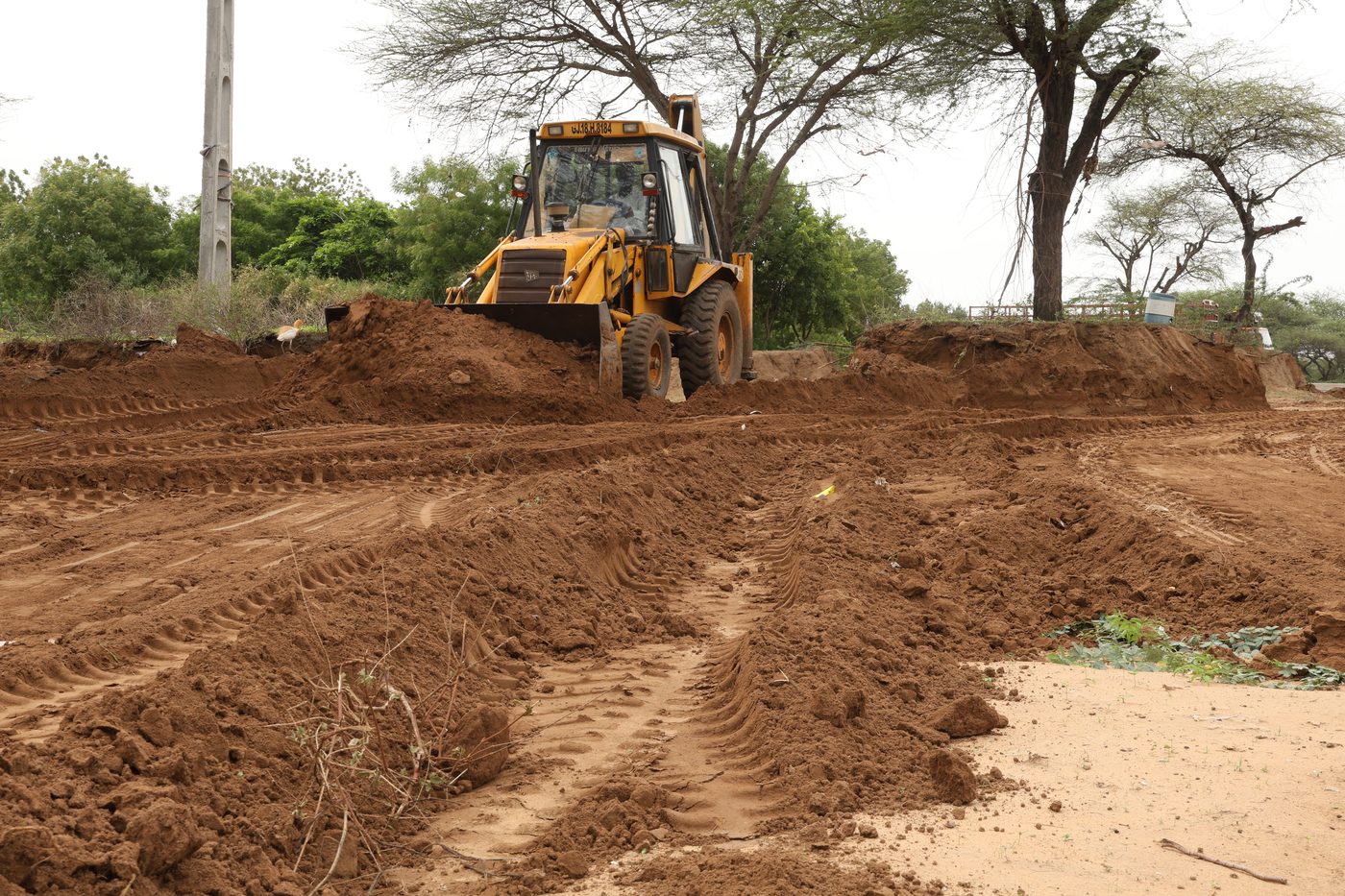
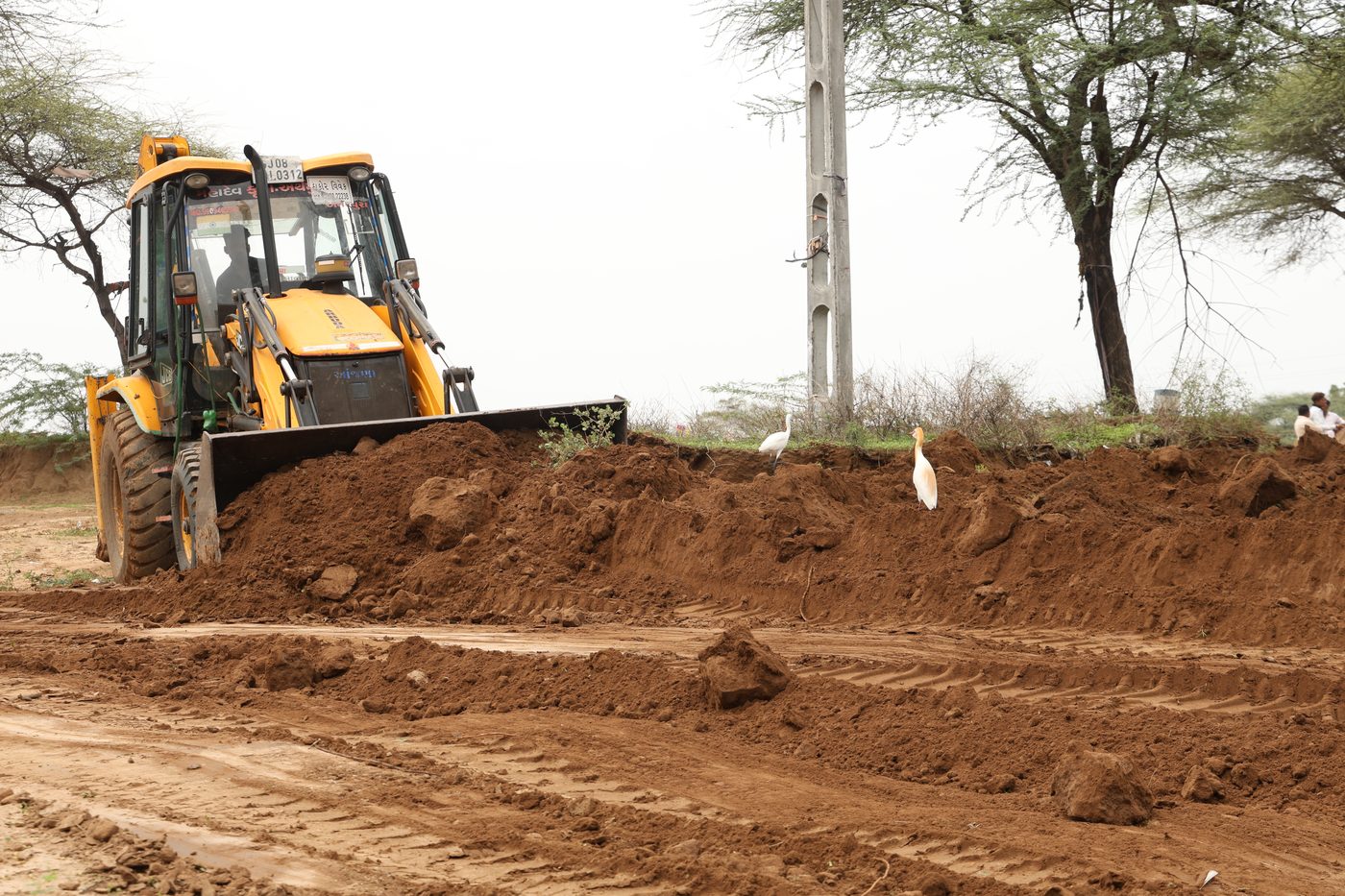
Earthwork In Progress
Heavy machinery shaping the ground, ponds, and planting rows.
These on-site visuals capture the scale of the land-preparation phase — deep cuts, soil loading, and the emerging lake-bed section that will anchor the park’s water systems.
Land & Water Features
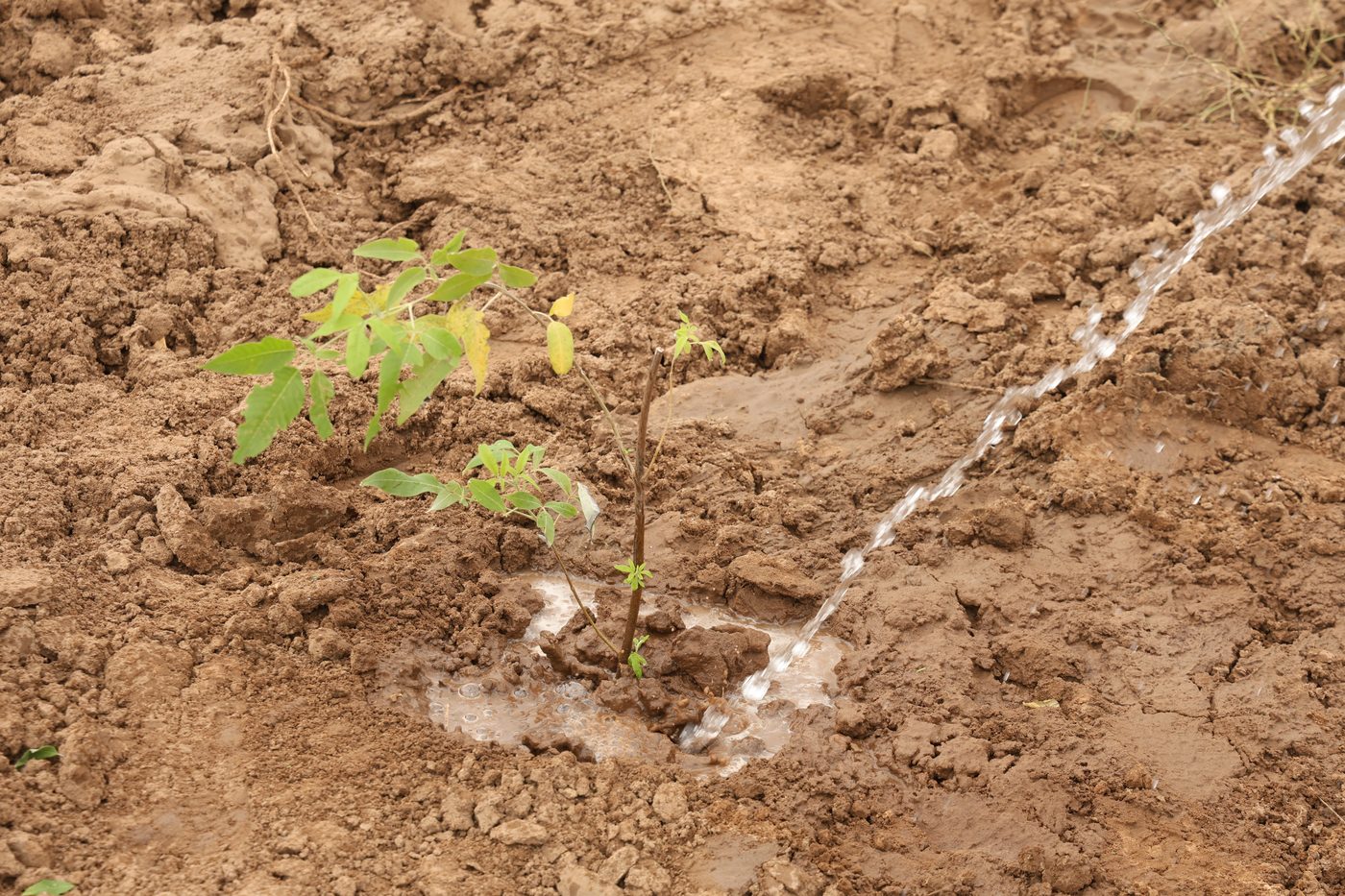
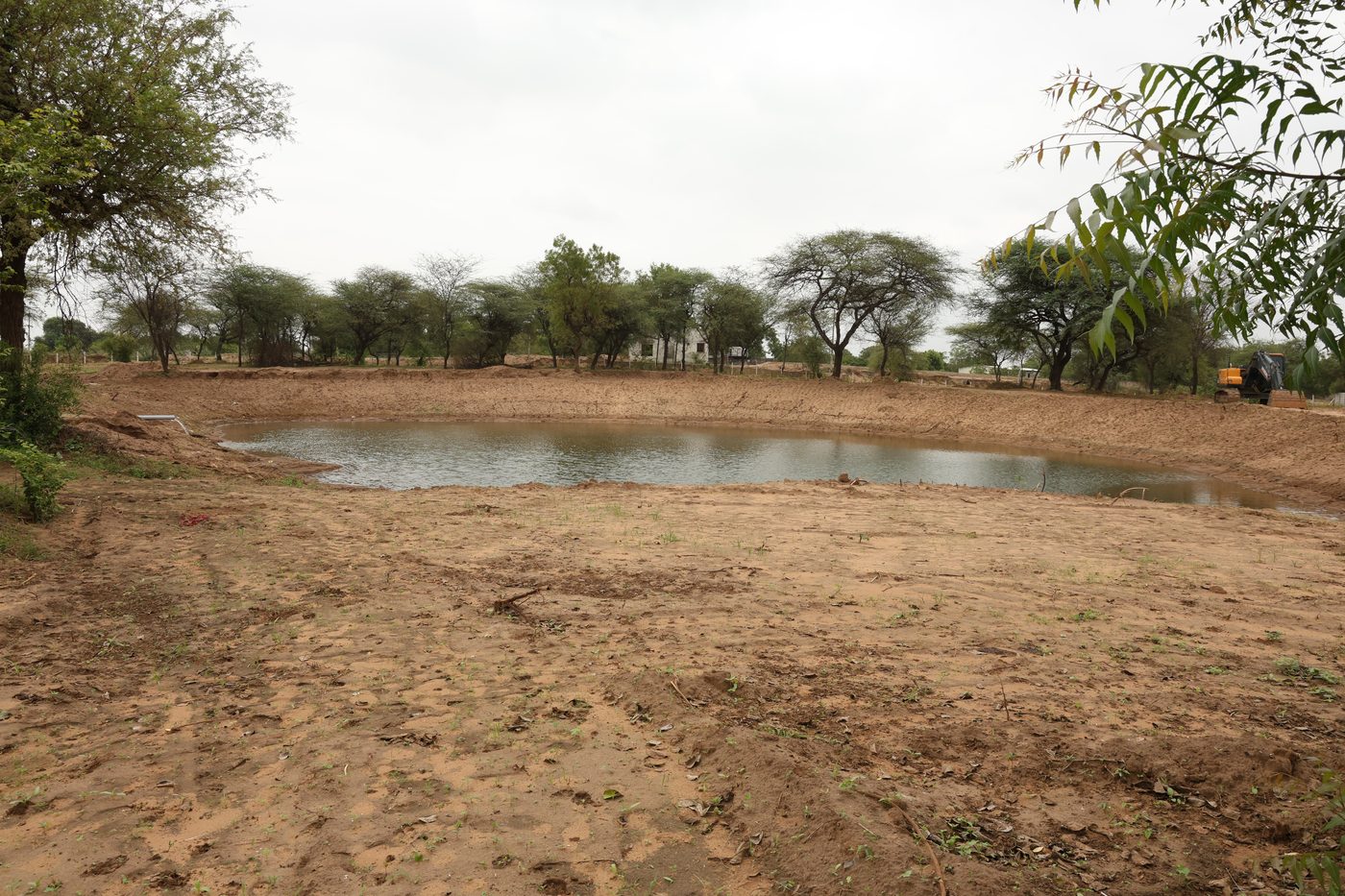
Planting trenches and water-retention ponds built into the terrain.
Water, Storage & Recharge
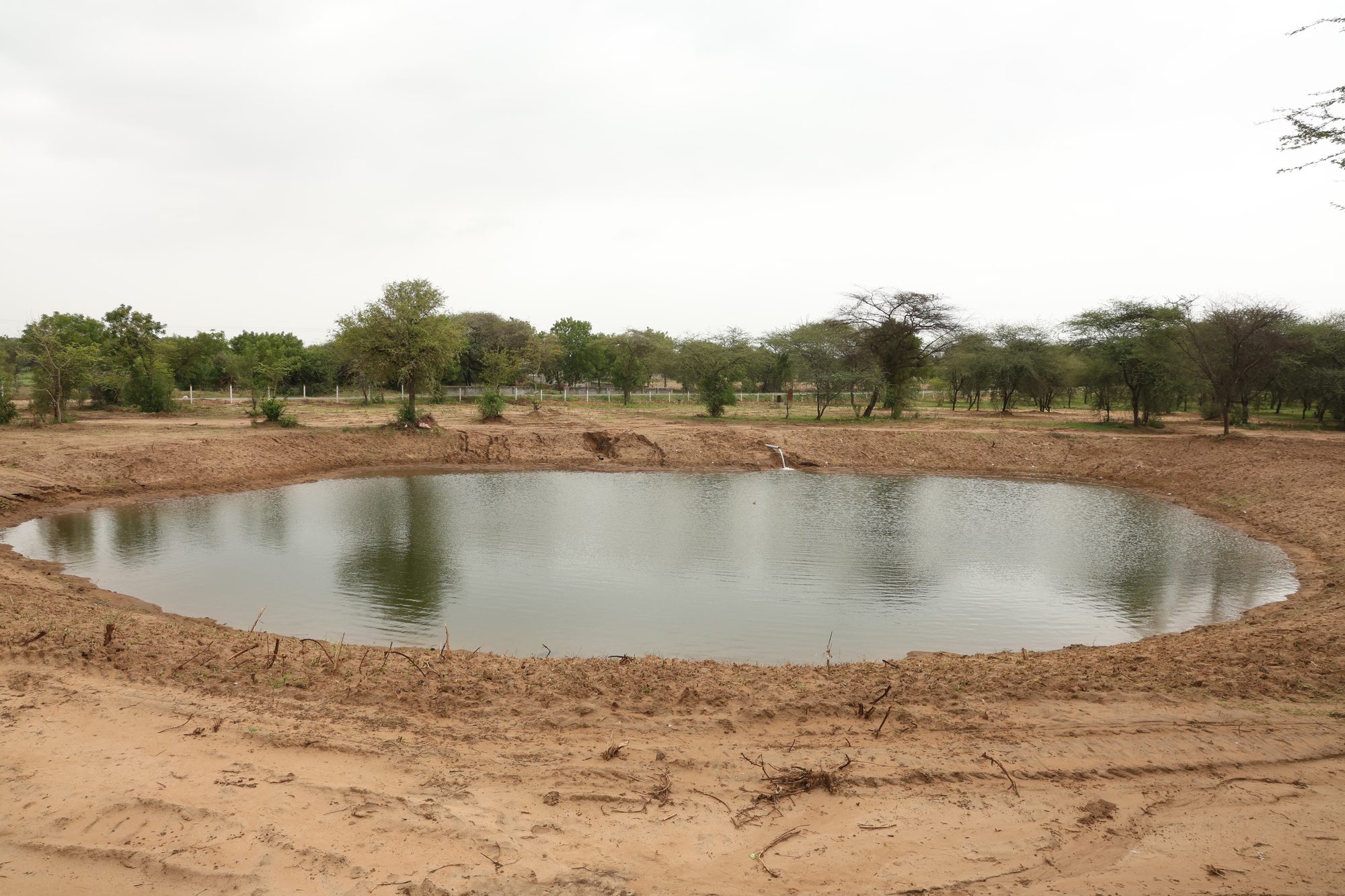
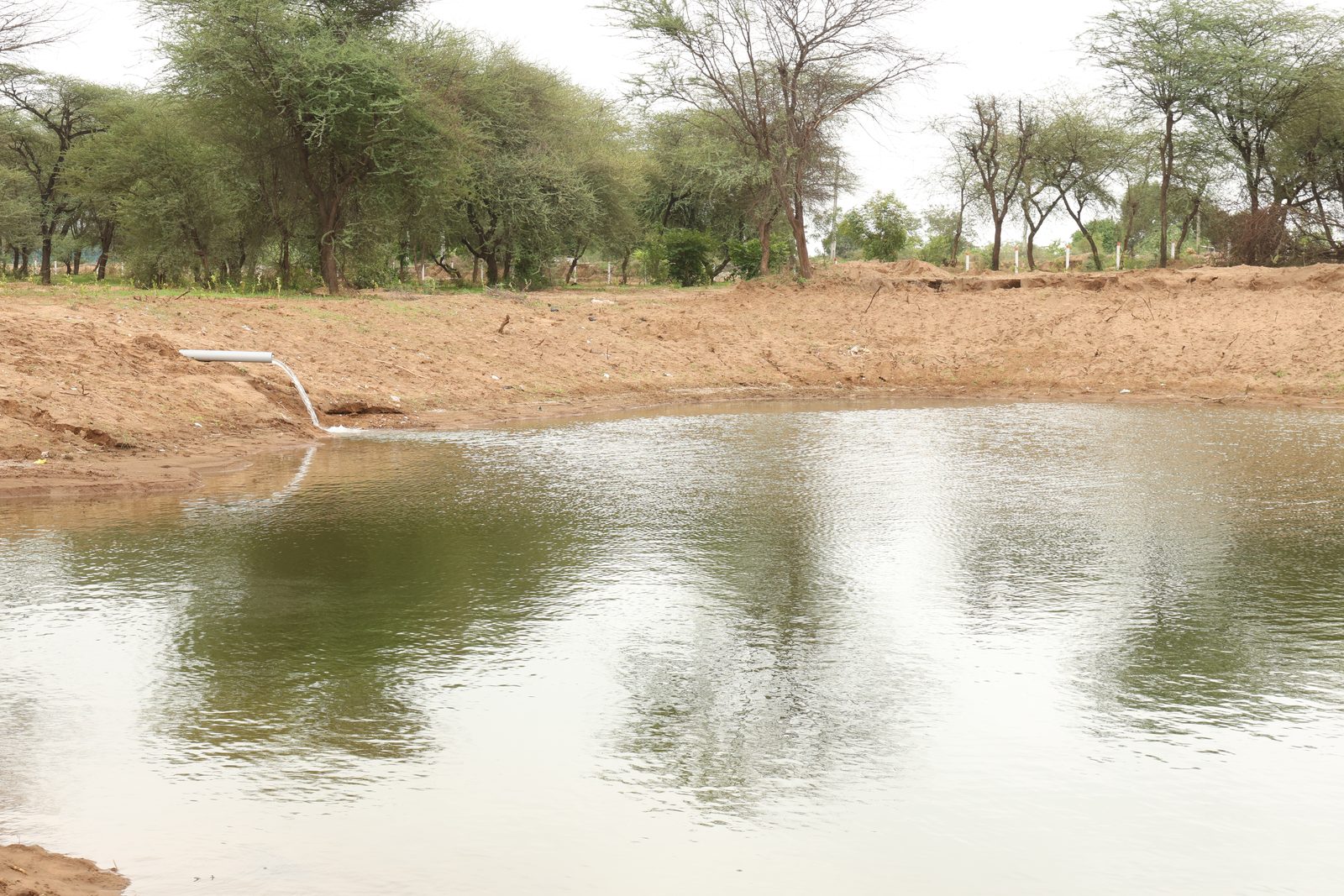
A lake engineered to hold rainfall and return it to the aquifer.
Jaspur’s soil profile is what makes its recharge performance strong. Below the red topsoil sit sandy layers that let water percolate freely, so water held in the lake does not simply evaporate — it filters downward and replenishes the aquifer beneath the site.
With Gandhinagar receiving roughly 800 mm of rain a year, about 24 million litres falls directly on the 30,000 m² project area. Contour grading and stormwater channels direct that runoff into the lake and the trench network rather than letting it drain away.
Why The Depth Matters
Storage capacity is a direct function of lake geometry. At 5,000 m² and an average depth of 3.25 m, the lake holds 16,250 m³ — roughly 16.25 million litres — when full. Greater depth means more water stored per square metre, less surface area exposed to evaporation, and a longer window over which water can infiltrate into the sandy subsoil.
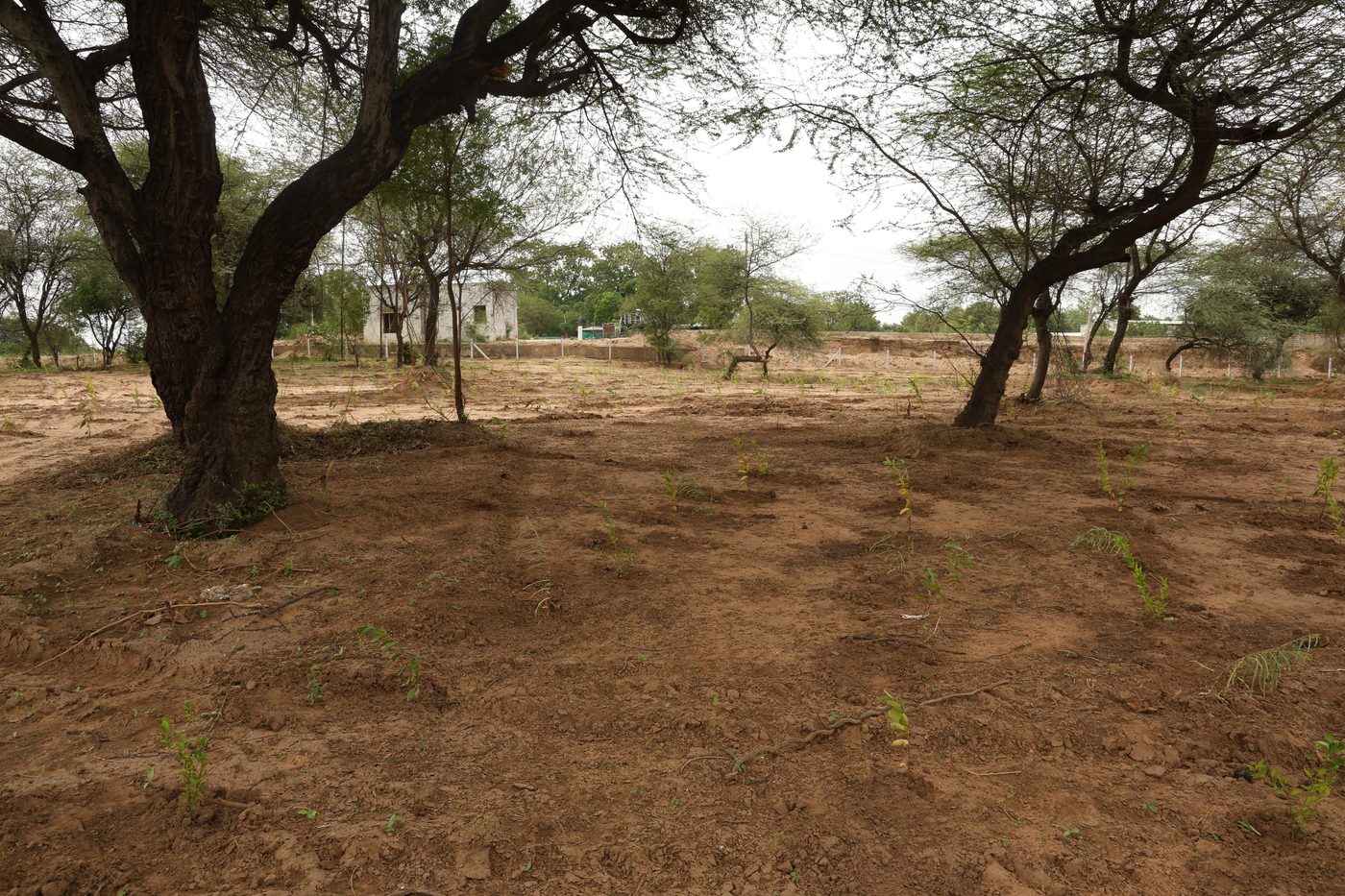
Existing Site Conditions
Building on what the land already holds — mature trees preserved, native soil retained.
- Dense mature Prosopis / Acacia trees retained across the site
- Existing trees (marked ‘E’) preserved per the planting plan
- New trees (marked ‘X’) planted in designated pits
- Concrete boundary posts installed along the perimeter
- Sandy loam soil — ideal for native dryland species
Soil Profile
Planting and water strategy adapted to what lies beneath.
Every Anandam oxygen park sits on a different soil profile, and each plantation and water plan is designed around it rather than applied as a one-size-fits-all template. At Jaspur, a red upper layer gives young roots firm anchorage, while the sandy layers beneath it move water downward into the aquifer.
This combination — stable at the surface, permeable at depth — is precisely what makes the site well suited to a rainwater lake paired with dense native plantation.
Upper Layer · Red Soil
Improves root anchorage and supports strong early establishment of saplings.
Lower Layers · Sandy Soil
Promotes rapid infiltration, carrying stored water down into the groundwater table.
Tree Species Schedule
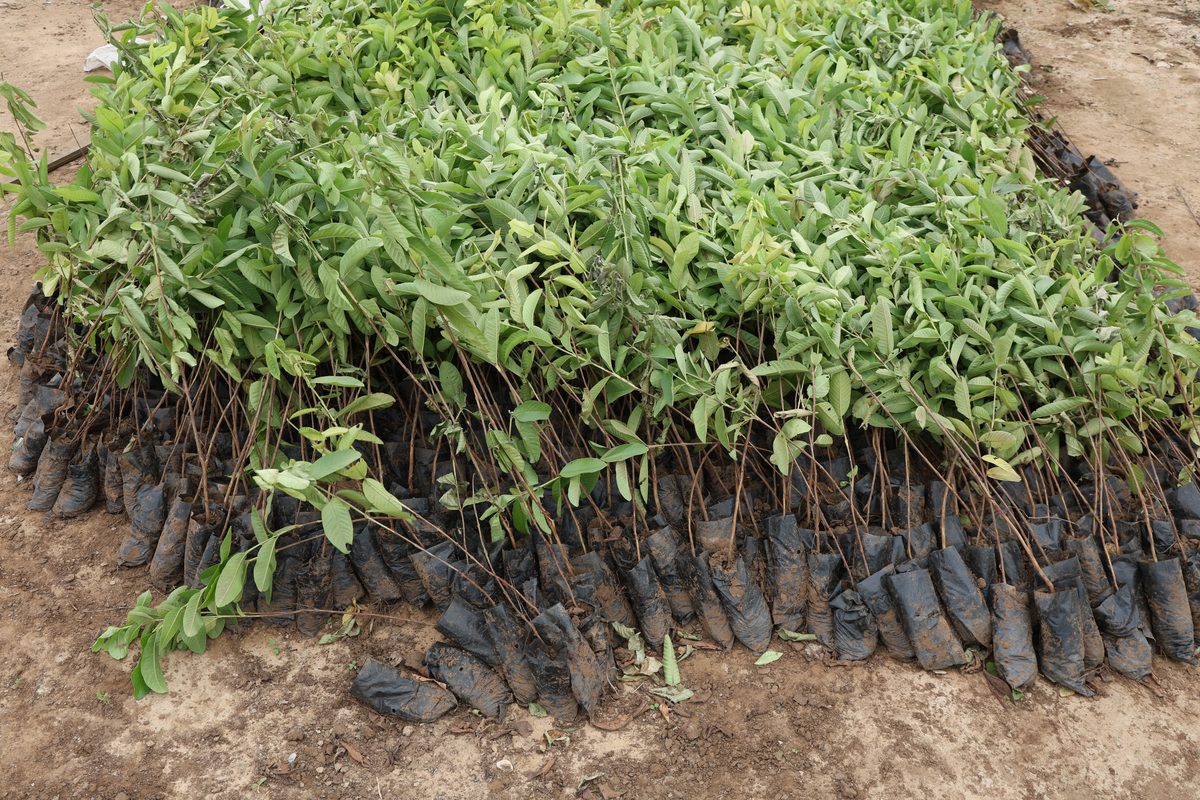
A native planting palette drawn from a 68-species schedule.
Albizzia amara
Bombax ceiba
Holoptelea integrifolia
Mimusops elengi
Tabebuia rosea
Azadirachta indica
Butea monosperma
Delonix regia
Plumeria alba
Tectona grandis
Ficus religiosa
Saraca asoca
A representative selection from the full 68-species planting palette, spanning canopy, flowering, timber, and sacred native species suited to the region.
Planting Specification
Every pit prepared to the same disciplined standard.
01 · Plantation Grid
Uniform 1 m × 1 m spacing for high-density, forest-like plantation across the site.
02 · Pit Size
Standardized 1 ft × 1 ft × 1 ft pit at every grid point for consistent establishment.
03 · Irrigation Trenches
Shallow trenches run alongside plantation rows following the site’s natural slope.
04 · Backfill & Soil
Good earth blended with organic manure to give young roots a healthy start.
05 · Native Species Mix
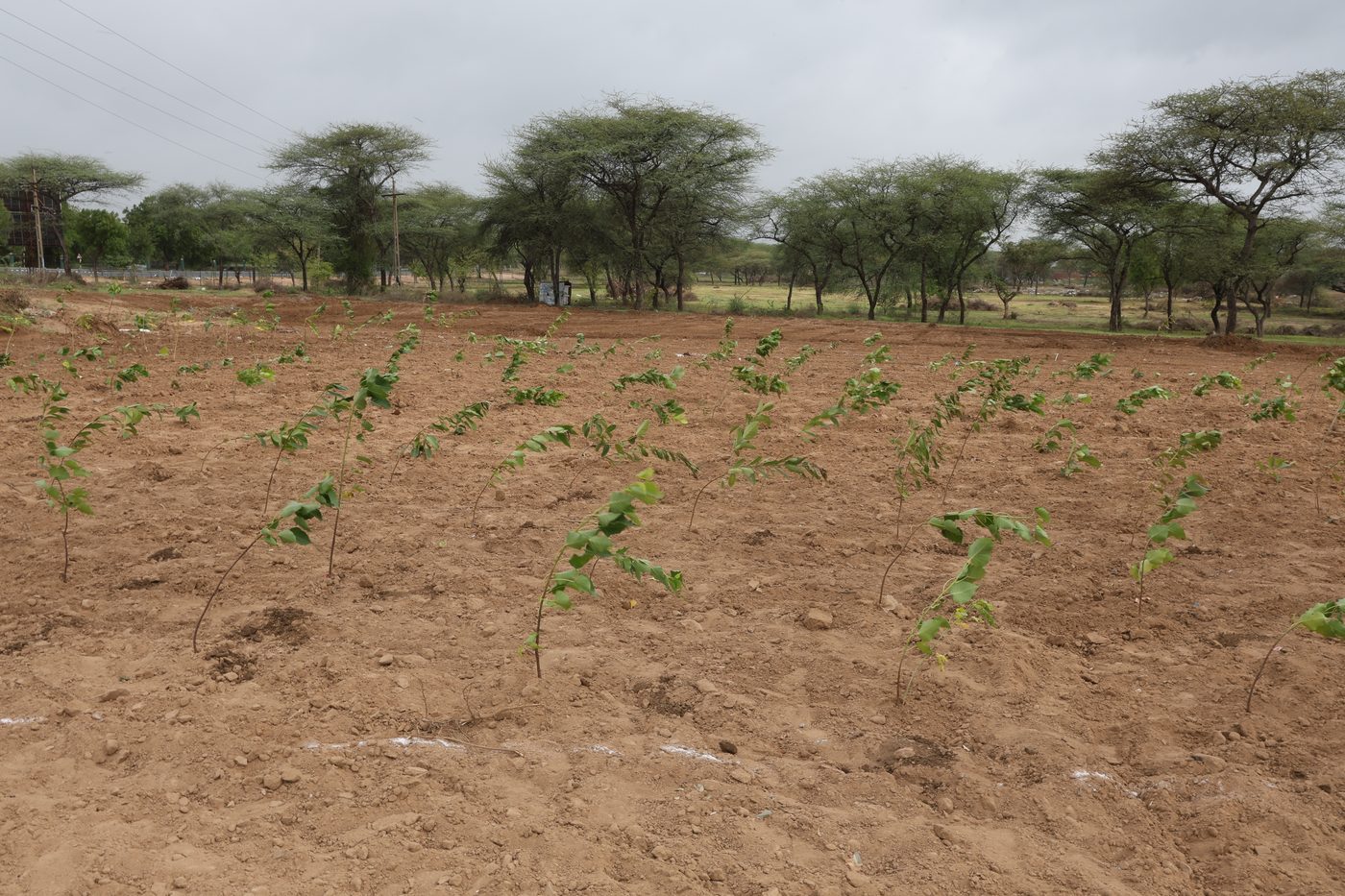
Climate-resilient native trees and shrubs, drawn from a 68-species canopy palette.
06 · Establishment Care
Staking, immediate irrigation after planting, and monitored watering through establishment.
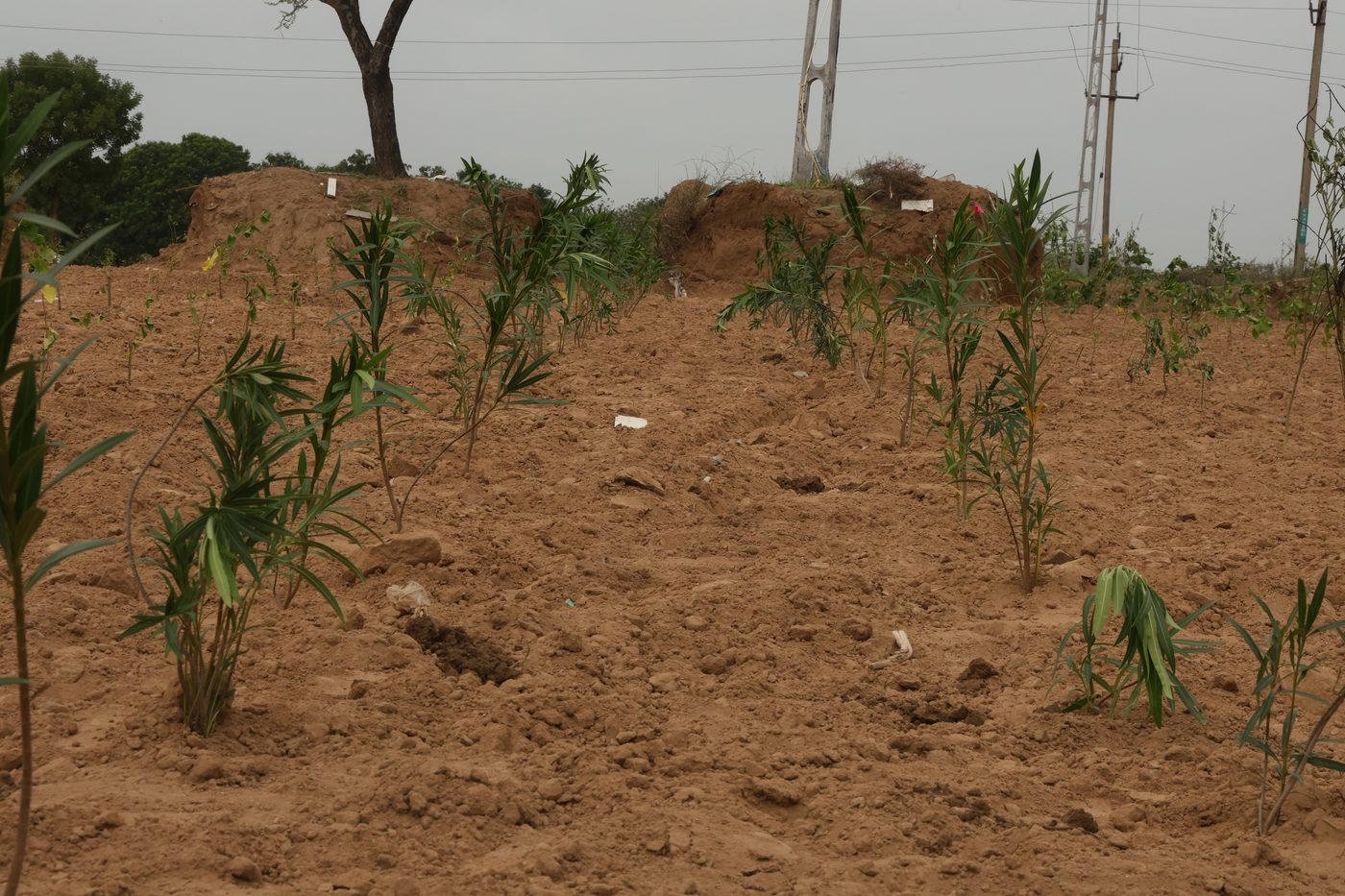
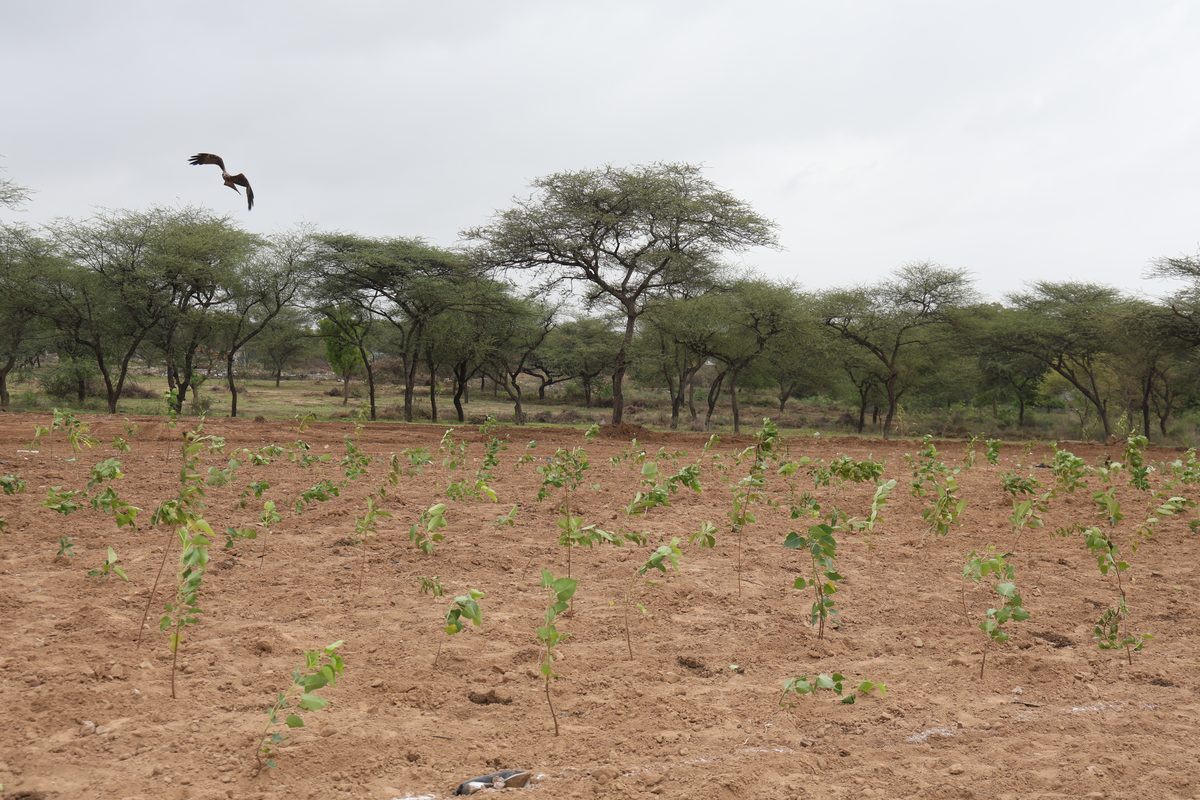
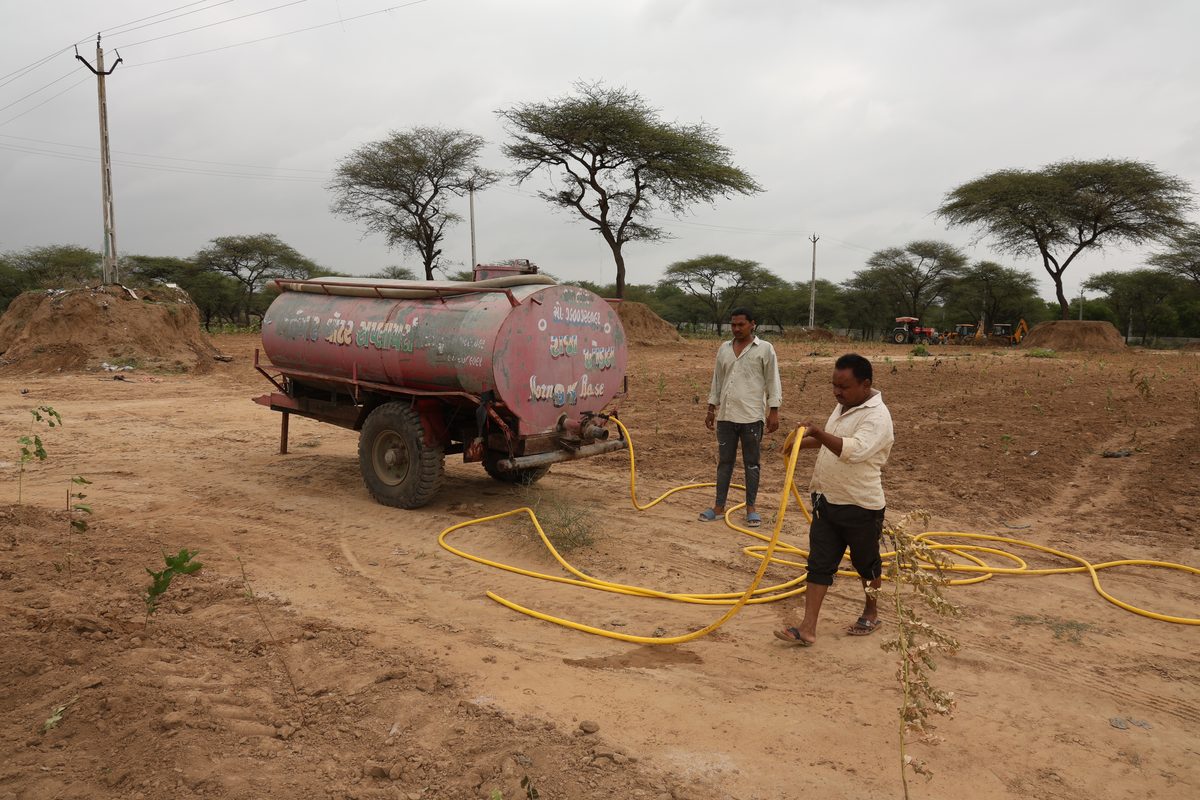
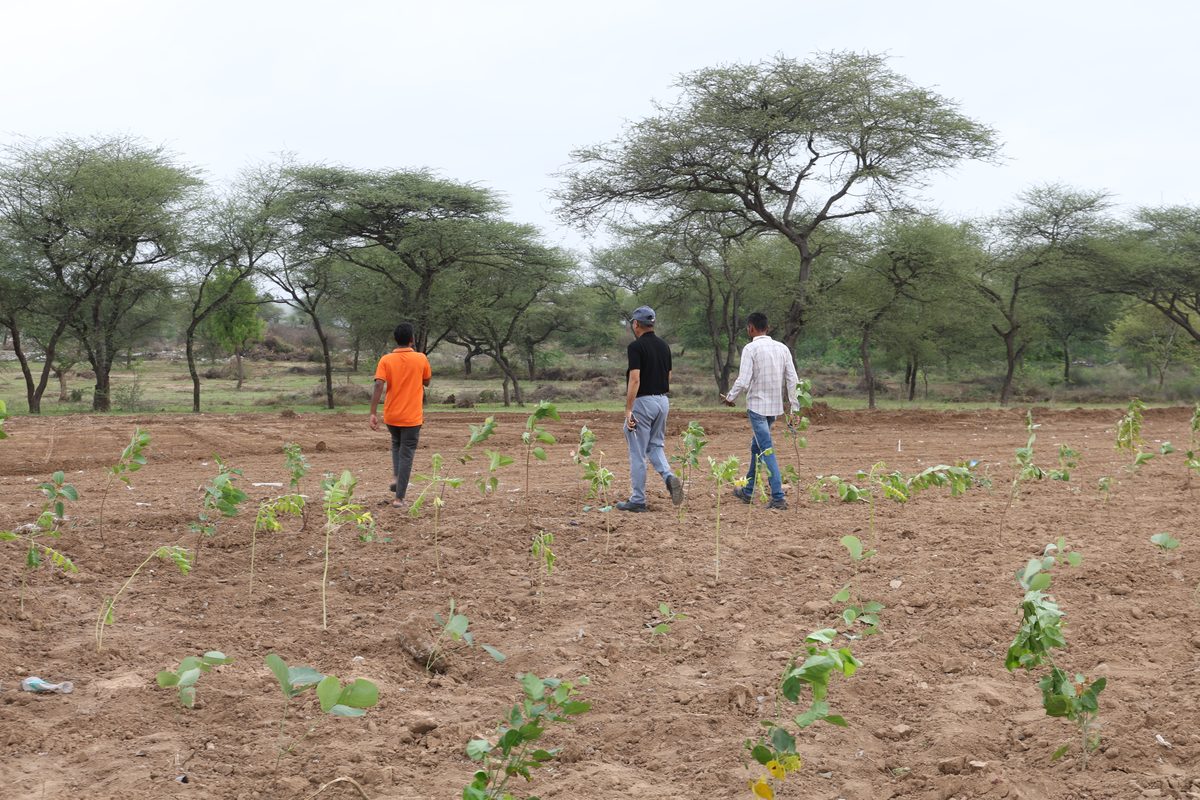
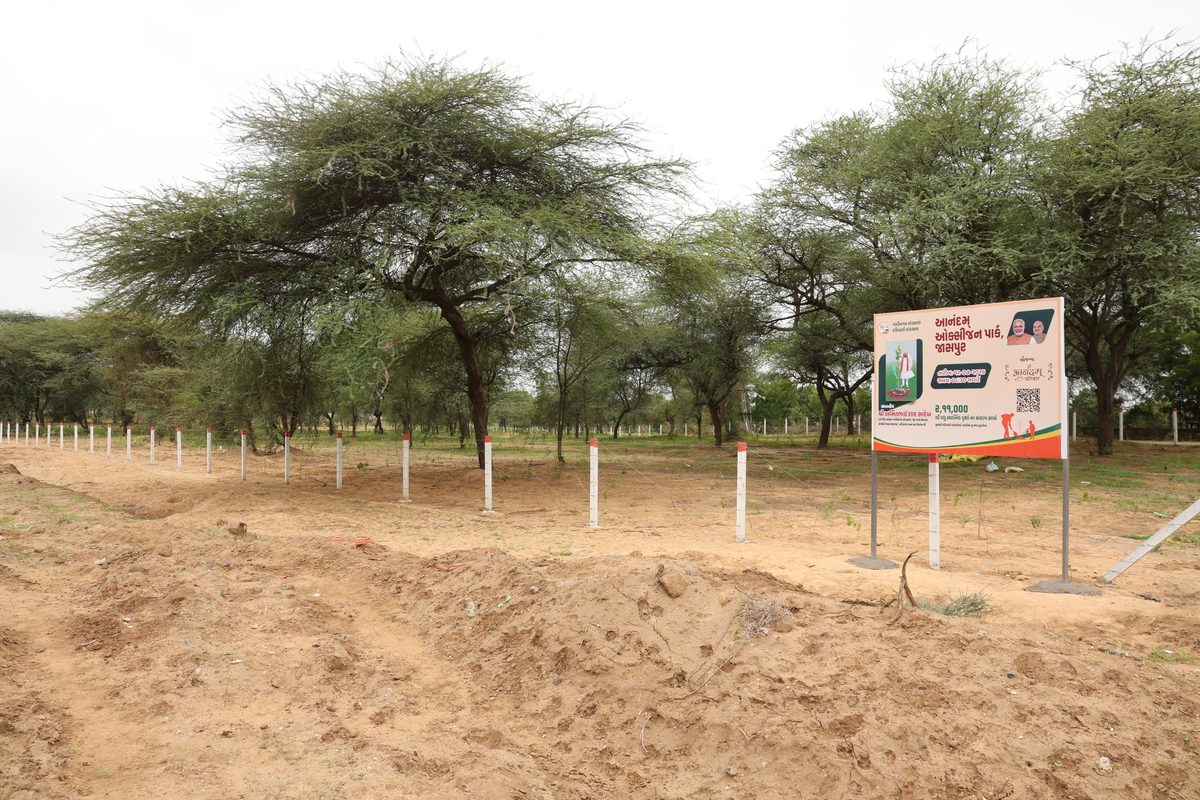
Site Photo Documentation
On-ground progress recorded in July 2026.
Challenges & Solutions
The engineering behind a self-sustaining landscape.
Challenges
- Dense, unmanaged Desi Babool across the site
- Uneven terrain unsuitable for scientific plantation
- Seasonal rainwater leaving the site unused
- No existing irrigation infrastructure
- Need to protect the site from future encroachment
Solutions
- Selective vegetation management and full land grading
- Boundary fencing for long-term protection
- Excavation of a rainwater-harvesting lake
- Gravity-assisted irrigation trenches along the slope
- Scientific 1 m × 1 m layout with standardized pits
Key Successes
- Neglected land transformed into a planned ecological landscape
- Water harvesting integrated directly with plantation irrigation
- Future irrigation effort reduced through gravity-fed trenching
- Progress reviewed and appreciated during the Gandhinagar District Collector’s site visit
Environmental Infrastructure
More than trees — an investment in natural infrastructure.
The indicators below are the combined totals across all three Anandam oxygen parks — Jaspur, Dantali, and Lapkaman. Together they function less like a plantation and more like a piece of public infrastructure: land restored, water banked, air cooled.
Jaspur’s share
30,000 m²
of the restored landscape
40,000
of the trees & shrubs
16.25M litres
of the rainwater storage
Land & Plantation
Water
Climate & Air
Operational Efficiency
Survival Scenarios
Carbon and oxygen, modelled three ways.
Rather than assume a single outcome, the projections are modelled at three long-term plantation survival rates across all 215,000 trees. We publish 70% as our baseline.
60%Survival
- Mature trees
- 129,000
- CO2 / year
- ≈2,300 t
- Oxygen / year
- ≈12,900 t
70%Survival
- Mature trees
- 150,500
- CO2 / year
- ≈2,700 t
- Oxygen / year
- ≈15,050 t
80%Survival
- Mature trees
- 172,000
- CO2 / year
- ≈3,100 t
- Oxygen / year
- ≈17,200 t
A note on methodology
The environmental impact figures presented are engineering estimates based on project dimensions, lake geometry, Gandhinagar’s average annual rainfall, regional soil characteristics, published urban forestry and hydrological research, and projected long-term plantation survival. Actual outcomes will depend on rainfall variability, species survival, maintenance practices, and natural site conditions.
Site Location
Find Jaspur Oxygen Park on the map.
Growing A Greener Tomorrow
From prepared dryland to a thriving native forest and public green lung.
With the land prepared, trenches cut, and ponds in place, Jaspur Oxygen Park moves into its plantation phase — establishing 68 native species across a disciplined 5m × 5m grid. Over time, the site is designed to recharge groundwater, cool its surroundings, and grow into a lasting ecological asset for the community.
Delivered by Anandam Parivar in collaboration with the Government of Gujarat, the project reflects a shared commitment to dryland restoration and native biodiversity.
Be Part Of The Green Movement
Want to support, visit, or collaborate on Anandam’s oxygen parks? We would love to connect and share the road ahead for Jaspur and our other green projects.
Discuss The Project